Community resilience
Building Roots.
Your preparedness ceiling is set by the relationships you build before you need them. This is a guide to becoming someone your community would miss.
The idea
Roots grow down before they hold anything up.
You do not network a tree. You plant it in one place and keep it alive. The relationships that matter in a disruption are the ones that already existed before it started. A stranger who appears after the trucks stop is not in the circle. A regular customer who has been showing up for years already is.
Daniel Aldrich, whose research spans disasters from the 1995 Kobe earthquake to Hurricane Katrina, found that social capital was a stronger predictor of community recovery than household income, insurance coverage, or the speed of government response.1 The mechanism is not complicated: people help the people they already know. The implication is practical. Building these relationships is not a supplement to preparedness. It is the ceiling on everything else you do.
This guide describes four ways to put down those roots through the ordinary rhythms of daily life. None of them require mentioning emergencies, buying specialized gear, or joining a group with "preparedness" in its name. They require showing up, being useful, and staying.
From the field
When Hurricane Harvey flooded Houston in 2017, one neighborhood's informal network of residents who already knew each other became West Street Recovery, a permanent community organization that helped hundreds of families gut, clean, and rebuild their homes. The relationships existed before the water rose. Neighborhoods that had to form those connections after the crisis consistently recovered more slowly. The pattern repeats across decades of disaster research: the people who already knew each other's names moved first, shared more, and rebuilt faster.
The framework
Four roots, one tree.
Each one connects you to a different part of the community. Together they make you known, useful, and present.
01
People
Know the people who keep scarce systems running: medicine, food, machines, infrastructure, and civic order. Character first, then capability.
02
Shop local
Same pharmacy, same market vendors, same mechanic. Regular spending builds the relationships that matter and keeps local skill in your community.
03
Belong
Join a group that meets regularly and creates mutual obligation. A congregation, a civic club, a veterans post, a volunteer company. Somewhere you are expected.
04
Volunteer
Regular unpaid work in your community. Fire, rescue, food pantry, hospital auxiliary, civic board. Show up when it is inconvenient.
Root one
The people who keep things running.
Every community depends on a handful of people whose skills are hard to replace. When formal systems thin out, these are the people everyone turns to. Knowing them now, as a regular part of your life, is different from meeting them when you need something.
The priority is character first, then scarce skills that keep people alive, then people who can keep tools and systems working. A competent person you cannot trust is a liability. A trustworthy person with one real skill is an asset.
The priority list
Pharmacist
Knows what substitutes for what, what truly expires versus what does not, compounding, rationing, and the overlap between veterinary and human medications. In a small town, there may be one or two. After-action reports from rural disasters consistently find that when a community loses its independent pharmacy to a chain or a closure, it loses the person who knew which patients were on which medications and could improvise when supply chains broke.
Working clinician
A doctor, nurse practitioner, PA, or experienced ER nurse who still practices. Diagnosis and procedures matter more than a stockpile of bandages. An active rural NP is often more useful than a retired specialist.
Veterinarian
Underrated. Rural vets perform surgery, wound care, and antibiotics management under worse conditions than many human clinics. Livestock health is food security.
Farmer or rancher
Someone with soil, seed, animals, equipment, and the habit of producing calories every year. Food is the bottleneck that opens after the first weeks and stays open.
Mechanic
Especially diesel, small engine, and farm equipment. Tractors, generators, well pumps, and chainsaws keep a community functioning. A parts-scrounging independent shop is often more valuable than a dealer technician who only swaps modules.
Electrician
One who understands generators, solar, and wiring beyond "call the utility company." Water pumps, refrigeration, and communications depend on someone who can keep power flowing.
Plumber or well technician
Wells, springs, gravity feed, septic, sanitation. Contaminated water causes more harm during extended disruptions than most threats people spend time worrying about.2
Welder or fabricator
Broken things stay broken without metalwork. The same applies to a carpenter who can actually frame, roof, and repair.
Ham radio operator
When phones and internet fail, amateur radio is how communities talk to each other and receive information from outside the affected area. Look for a local amateur radio club, not someone with equipment and no practice.
Trusted civic leader
A deputy, a volunteer fire chief, a veteran, or a civic organizer people already respect. The point is order and cooperation, not authority. Someone the community already follows.
Also worth knowing
Dentist. Midwife. Feed-store or hardware owner. A serious hunter who fills a freezer. A pastor, rabbi, imam, or civic organizer people already follow. These are the second ring. Social trust matters as much as skill once stress sets in.
Who not to prioritize
People whose only offering is talk. Anyone whose first instinct is to take inventory of what you have. People who advertise how prepared they are. Skills without reliability. The brilliant person who never shows up is not an asset.
What you bring matters too
Labor, repair skill, stored food you will share, calm under pressure, or medical and logistical help. These are the currencies that make someone want you in their circle. Ask yourself: if they were making a list, would your name be on it?
Root two
Shop local on purpose.
Shopping local is how you actually meet the people on that list. It is not a separate project. It is the method.
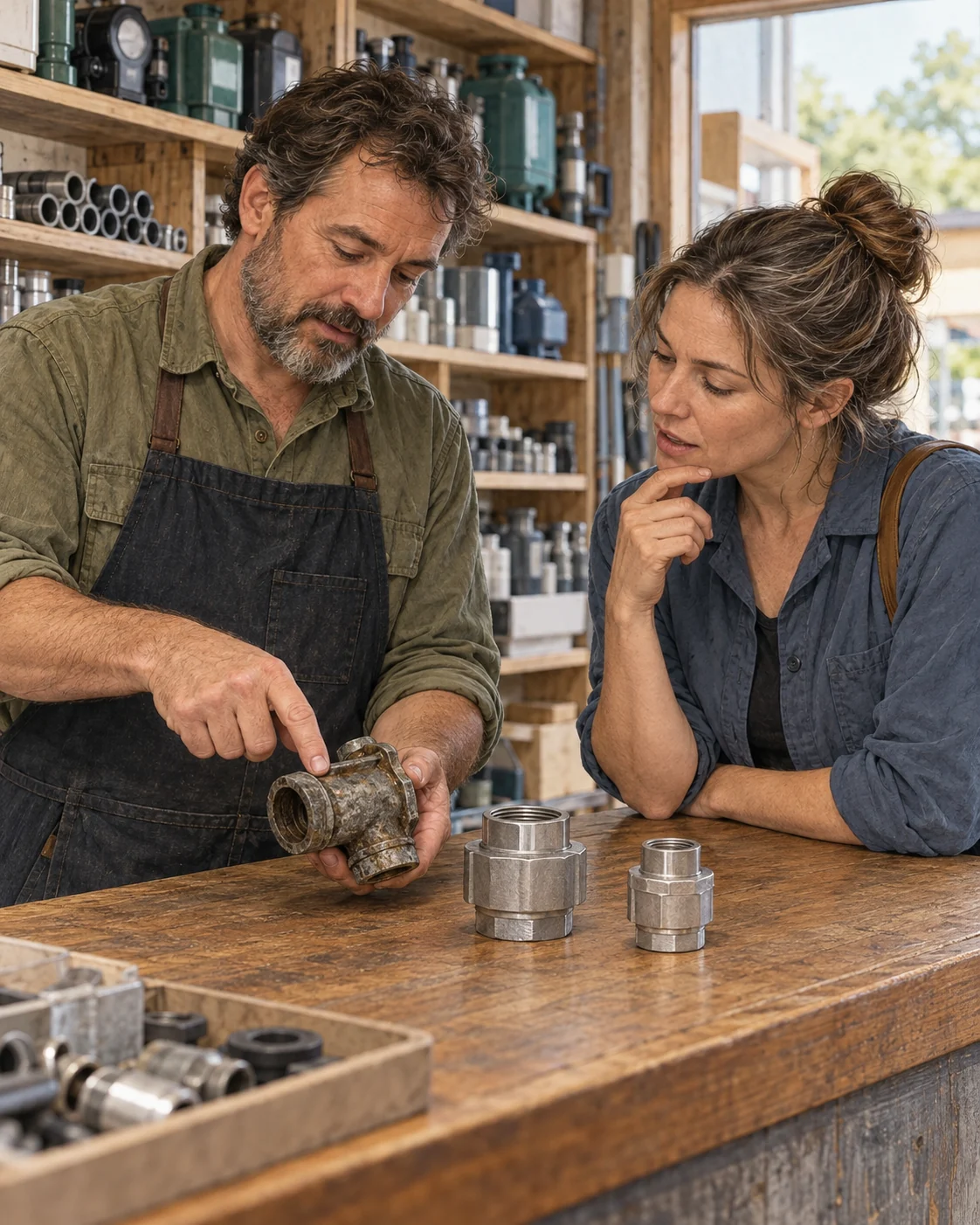
A regular customer who pays on time, remembers names, and comes back when something breaks is already in the circle. Local shops are a community's spare-parts closet, information desk, and informal credit system. The owner knows who still has diesel, seed, or a working well pump. Staff know who is competent and who talks a good game. Money you spend now keeps that shop open and that skill in town.
Where to direct your spending
Match your spending to the relationships from the priority list. Every purchase does double duty: you get what you need and you become known to someone who matters.
Independent pharmacy
Transfer prescriptions. Buy OTC medications, first-aid supplies, and home-health items there even when a chain is cheaper. The goal is that they know your name and your needs.
Farmers market
Buy from the same two or three vendors every week. Learn who grows what, who has eggs and meat, who saves seed. Do not just grab produce. Ask how the season is going. Show up in January if there is a winter market.
Small-engine and equipment service
Get your chainsaw sharpened, your mower serviced, and your generator maintained at the local shop. That relationship is more valuable than a pallet of new tools.
Independent mechanic
The shop that will still look at a twenty-year-old truck. Take oil changes, tires, and the "it makes a noise" jobs there so they know you pay and you are not a problem customer.
Hardware counter and feed store
Use the local counter for fasteners, pipe, wire, fencing, and advice. The person behind the counter is the one who knows who in town owns a welder.
Local veterinary clinic
For pets and, if you have them, livestock. Rural veterinary clinics are the community's medical bench. Pay the bill on time.
How to shop so it builds a relationship
Pick one shop per category and stay. Rotating for a dollar is how you remain a stranger.
Use the counter, not just the app. Ask "what would you use for this?" People remember the customer who asks good questions.
Bring repeat, boring business. Oil, filters, dog food, seeds, fencing clips. Emergency customers are forgotten. Weekly ones are not.
Return for service, not just the sale. The repair bay is where you meet the mechanic. The compounding window is where you meet the pharmacist.
Be the easy customer. If they are short-staffed, be patient. If they special-order something, pick it up when you said you would. Reputation is the whole game in a small community.
Move these off Amazon first
- Prescriptions and a deep OTC cabinet
- Animal feed and vet supplies
- Chainsaw, generator, and pump service
- Seeds, starts, canning supplies in season
- Fasteners, pipe, and electrical supplies
- Meat and produce you will actually eat
Leave Amazon for specialty parts your town does not carry. Do not let convenience eat the relationships.
Root three
Find a place where you are expected.
Shopping local gets you known at the counter. Belonging to a group puts you in the same room every week with families, retirees, farmers, nurses, mechanics, and the people who already organize meals when someone is in the hospital.
The form this takes depends on your life. For many people, it is a congregation. For others, it is a veterans post, a civic club, a lodge, a volunteer fire company, or a fraternal organization. The common thread is regular attendance, shared obligation, and the kind of trust that accumulates slowly through ordinary proximity. A group you join and attend for years gives you something a contact list never will: people who already know whether you keep your word.
What belonging actually provides
A weekly rhythm when days otherwise blur together during extended difficulty.
A quiet map of the community. Who farms, who fixes things, who has medical training, who keeps their word. You learn this by sitting in the same room, not by asking.
Obligations to other people when isolation would be easier. Someone notices when you do not show up.
Physical infrastructure. Kitchens, parking, a roof, a phone list, sometimes a generator. Those assets only help you if you are already part of the body that uses them. After the 2017 Mocoa mudslide in Colombia and the 2011 tsunami in Japan, researchers found that institutional remnants such as churches and community centers, along with their existing member lists, became the organizing framework for recovery when everything else had been swept away.
A reason to keep going. Shared purpose, shared songs, shared meals, shared work. When news and entertainment are gone, meaning is what remains.
How to join so it sticks
Show up every week. Irregular visitors stay visitors. Regulars get names, rides, casseroles, and phone trees.
Join one working group, not five committees. A choir, a men's or women's group, a supper crew, a visiting-the-sick team. Work is how you meet the nurse and the mechanic without a speech about anything.
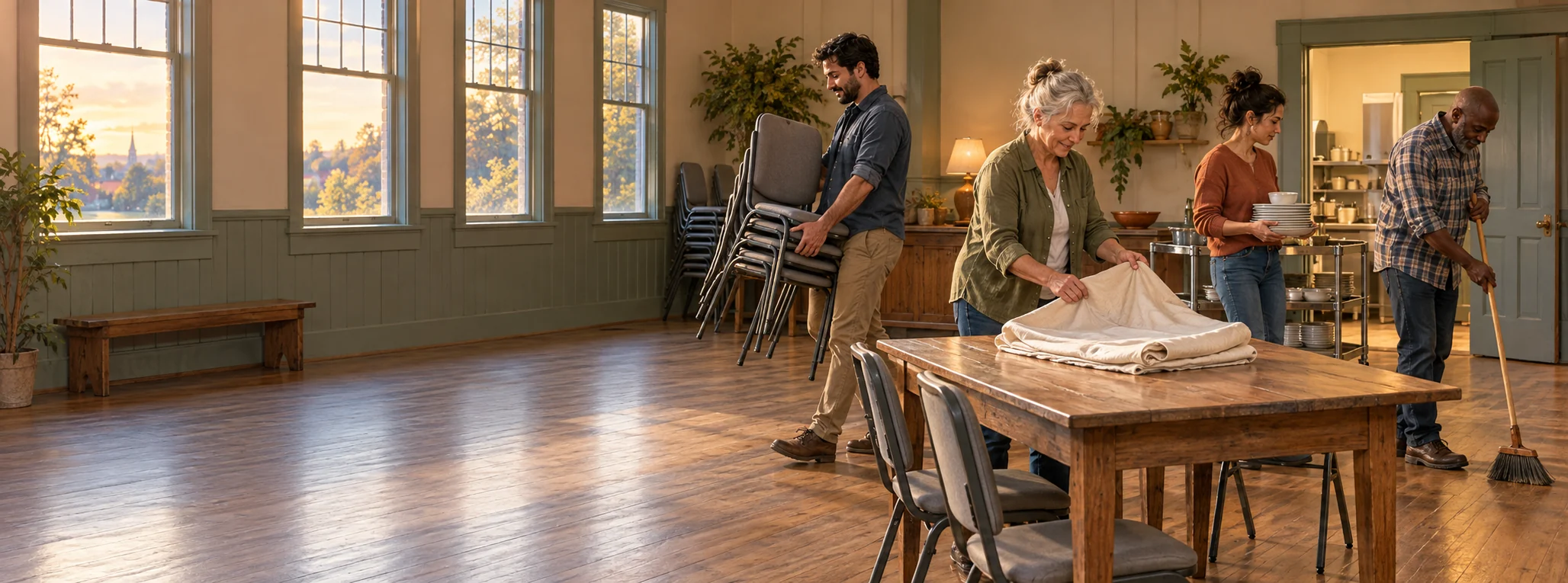
Serve before you ask. Stack chairs, deliver a meal, sit with someone after a funeral. That is the reputation that matters later.
Do not recruit from the pew or the podium. Talking about worst-case scenarios in a social setting makes you the odd one and can shut the door on the trust you need. Live as a steady member. The network forms around character.
For the faith-inclined
If worship is already part of your life, treat it as a discipline rather than a hobby. Read the hard parts. Practice gratitude and confession when life is still easy. Know the psalms of lament before you need them. If you have a family, practice together so the children have something to stand on that is not only "we have supplies in the basement."
If you are rebuilding rather than maintaining, start with the practices. Conviction rarely arrives as a feeling first. It arrives as a habit that holds when feelings do not.
Root four
Show up when it is inconvenient.
Volunteering is how the rest of this plan stops being theory. Regular unpaid work makes you someone the community already relies on.
A volunteer who shows up on wet Tuesdays has already passed the trust test. When systems thin out, communities do not invent new organizations. They lean on the fire department, the rescue squad, the food pantry, the hospital auxiliary, and the people who already know how to run a kitchen and operate a radio.
You also gain skills you cannot buy: traffic control, first aid under stress, who lives on which road, which houses have medical equipment, and who will actually answer a call at two in the morning.
Highest-value volunteer work
Emergency services
Volunteer fire department, rescue squad, CERT. This is where you meet EMTs, mechanics, and the people who already think in terms of "who is hurt and what do we have." The most time-heavy commitment. Do not join if you will flake.
Hospital and care
Hospital auxiliary, hospice volunteering, patient support. Puts you near nurses, discharge planners, and families in difficulty. Hospice work teaches sitting with dying people, which is a skill almost nobody trains for and almost everybody needs.
Food and neighbors
Meals on Wheels, food pantries, crisis ministries. You learn every porch that needs a hot meal and you work beside the same people who attend your congregation or civic group.
Building and growing
Habitat for Humanity is carpentry, logistics, and building materials. Extension Master Gardeners and 4-H are the farming-knowledge bench. Friends of the Library keep a knowledge institution open.
How to volunteer so it builds trust
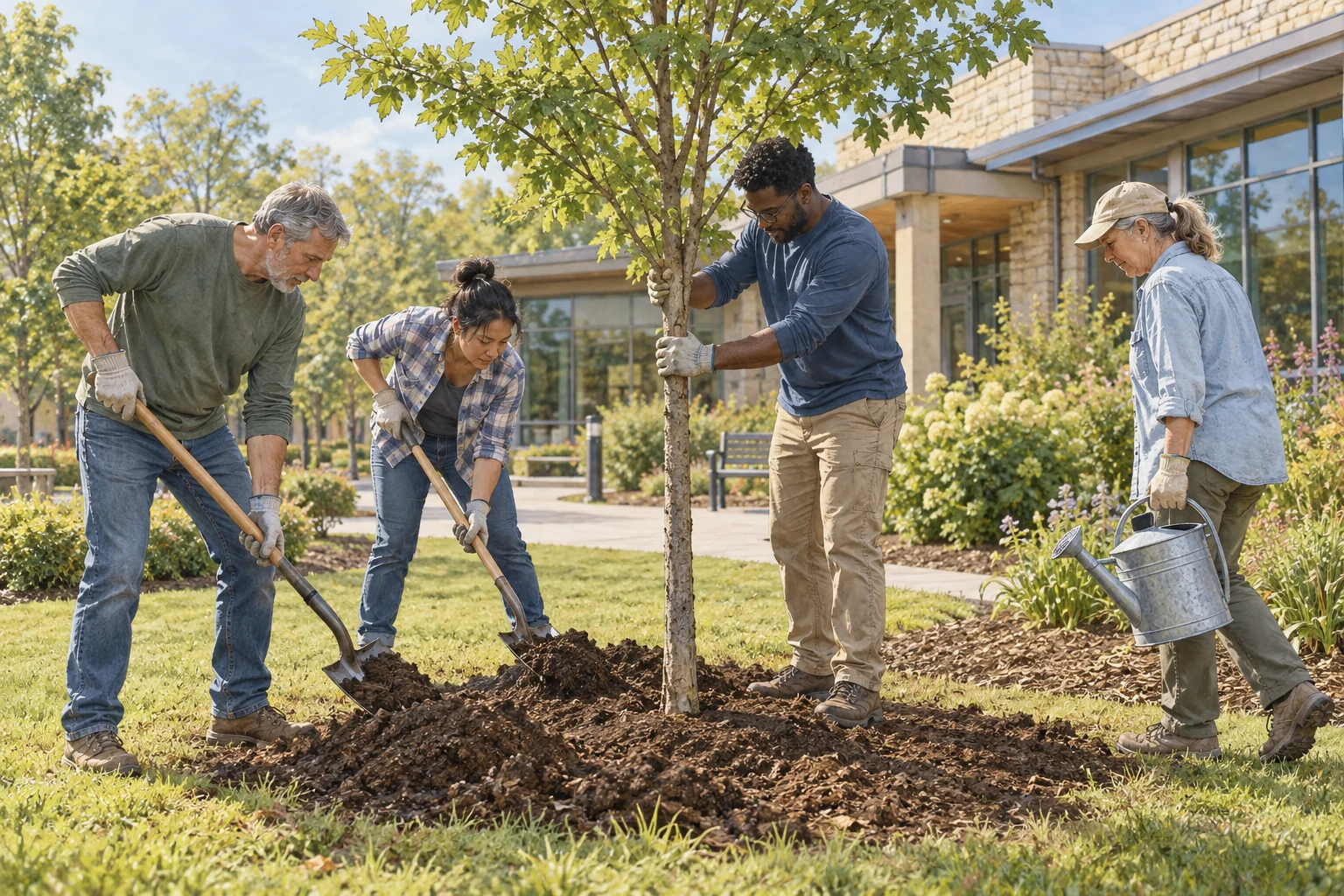
Stay three years, not three months. The useful people are the ones still there after the novelty fades.
Do the ugly jobs. Trash, dishes, night shifts, lifting. That is how team leads decide you are real.
Get trained. CPR, Stop the Bleed, basic fire, food-handler certification, chainsaw safety. Training is the skill. The vest is just the ticket in.
Carry your weight at work and home first. A volunteer who is unreliable in the rest of their life is a liability during a real event.
Let your commitments overlap. Delivering meals through your congregation is worship, local loyalty, and neighborhood knowledge in one loop.
The practical cap
Pick one heavy commitment and one light one. Fire or rescue plus a weekly pantry shift will fill your schedule if you also work. A hospital auxiliary morning plus a weekly meal delivery is enough to become known.
Putting it together
The weekly circuit.
If you only change one habit, build a weekly loop: one pharmacy stop, one farmers market morning, one equipment or hardware visit, one group meeting, and one volunteer shift. Same people, every week, for years.
Pharmacy and market
Build the medical and food relationships.
Shop and mechanic
Keep tools and machines alive. Get known at the counter.
Group meeting
The congregation, the post, the civic club. Where belonging accumulates.
Volunteer shift
One standing commitment. Where reputation is earned.
The test
If supply chains failed tomorrow, would the people in your community already know your name? Would they have a reason to want you in the room? If the answer is yes, the roots are in. If not, you know where to start.
Worth saying plainly
What this is not.
This is not a contact list. It is not a survivalist group that meets on Thursdays. It is not a speech about what happens when civilization fails. It is ordinary life, lived with a little more intention than usual.
The only visible difference between someone who has built these roots and someone who has not is that the first person is a better neighbor. They shop locally, show up when they are expected, volunteer their time, and know the people around them by name. Those habits make daily life better right now. They also happen to be the foundation of every community that has ever recovered well from something difficult.
That is the whole idea. Become the kind of person your community would miss. Everything else follows from that.
Sources
References and further reading.
1 Daniel P. Aldrich, Building Resilience: Social Capital in Post-Disaster Recovery (University of Chicago Press, 2012). Aldrich's cross-national research demonstrates that social capital outperforms material wealth as a predictor of post-disaster community recovery.
2 World Health Organization, "Drinking-water Fact Sheet" (2023). Contaminated water and poor sanitation are linked to disease transmission during and after disasters, including cholera, dysentery, and hepatitis A.
3 Eric Klinenberg, Heat Wave: A Social Autopsy of Disaster in Chicago (University of Chicago Press, 2002). Neighborhood-level analysis of the 1995 Chicago heat wave deaths, showing social isolation as the primary mortality driver.
4 Yuko Nakagawa and Rajib Shaw, "Social Capital: A Missing Link to Disaster Recovery," International Journal of Mass Emergencies and Disasters 22, no. 1 (2004): 5-34.
Next steps
Where do you want to start?
Starting out
Meet your closest neighbors
Knock on the four doors nearest yours. One conversation is a start.
The Four-Door IntroductionReady to go deeper
Find volunteer groups near you
CERT, fire, rescue, Red Cross, and civic organizations in your area.
Community hub