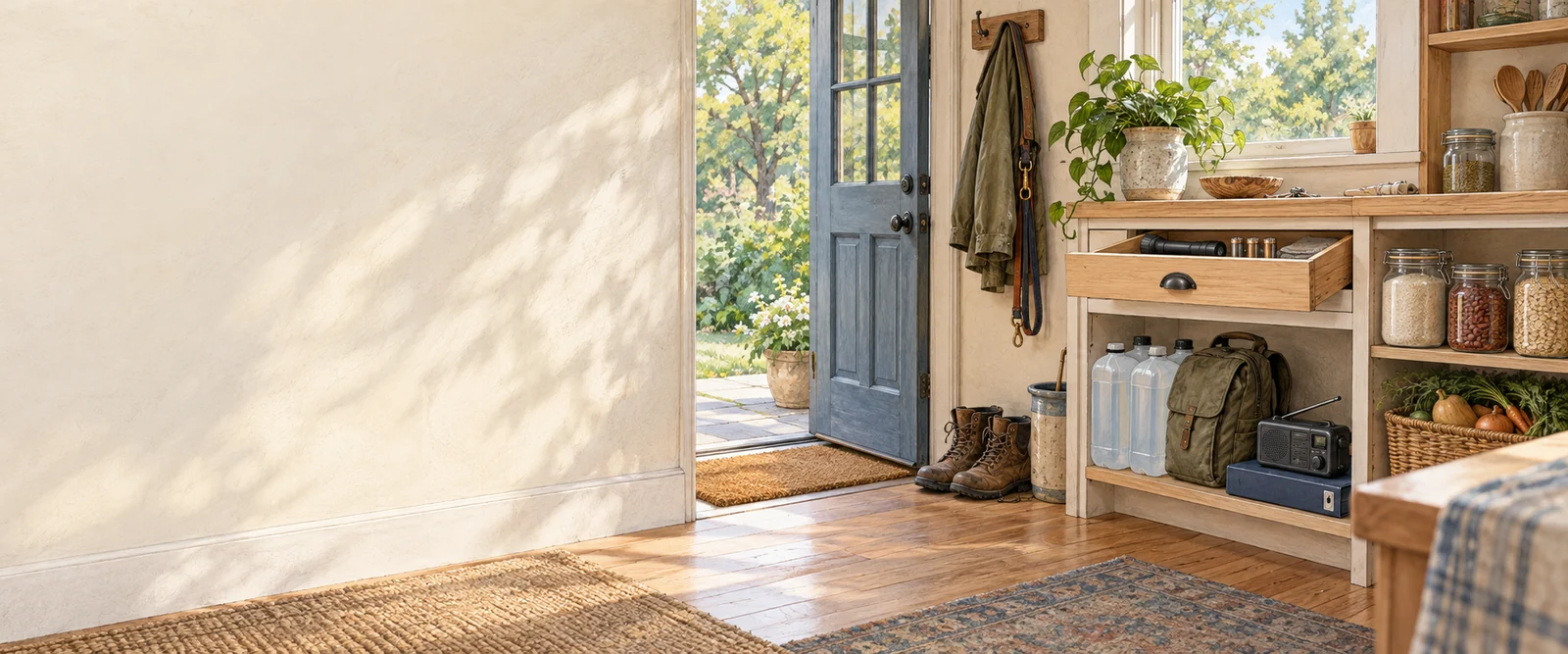
A field guide for households
Preparedness,
without the panic.
Cover the first 24 hours, the next two weeks, and the slower craft of doing more for yourself. Calm guidance, grounded in Ready.gov, Red Cross, and traditional practice.
Worried about something happening in the news right now? Start here.Content based on official guidance from Ready.gov, the American Red Cross, the CDC, and the hands-on traditions of generations who knew how to do for themselves.
What we mean by survival
Useful in an emergency.
Useful on a Tuesday.
No sirens. No countdowns. Just ordinary households becoming harder to break.
The name on the door says survival, and that's probably how you found us. But survival in the new world isn't what it used to be.
It's a flashlight you can find in the dark, a week of food you would actually eat, documents in order, neighbors you know, and enough margin to stay steady when normal life gets interrupted. We're here for that older, quieter work: building a household that can take care of itself and help the people around it.
It starts at home, and the circle widens outward.
Household steadiness
Job loss, big bills, hard seasons. Start with what feels least secure right now.
Community resilience
Connected households recover faster. Self-reliance makes you strong enough to serve.
Regional awareness
For households seeking water, food production, maintainable shelter, energy flexibility, and access to a functioning community.
Who this is for: Families, renters, homeowners, caregivers, older adults, pet owners, and anyone who wants a steadier household without fear-driven content.
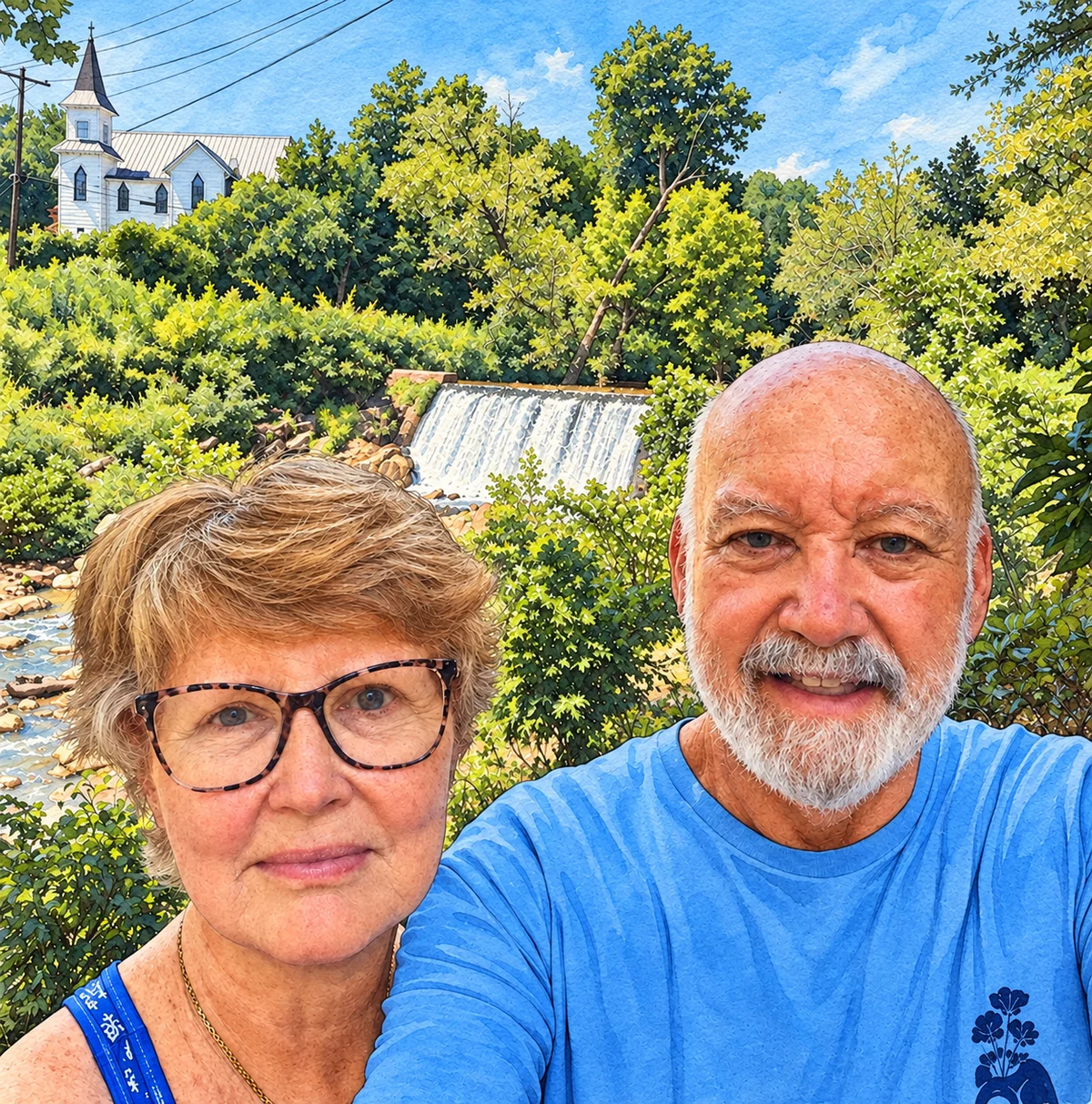
Dan and Vicki a short walk from the home. Elkin, North Carolina.
From the founders
We wanted to build a guide you could bookmark.
We rode out Hurricane Andrew in a small bathroom in South Florida in 1992, then spent the next week sorting donations at a makeshift distribution center in Homestead. We spent the years after that buying generators, canners, impact windows, and a fair amount of gear that fear talked us into. In 2008 we left the peninsula for a small town in the North Carolina foothills. In 2009 we started a community garden named for Dan's mother.
Between the storms, our family dealt with the things no emergency kit covers: surgeries, cancers, caregiving, a business that took a hard turn, and the daily work of keeping a big family pointed in the same direction. After thirty years of getting some of this wrong, and a dozen people across four generations counting on us to get it right, we wanted to build a guide you could bookmark. The page you print and hand to your teenager. The kind of knowledge that leaves a household more capable today than it was yesterday. What worked is here. What we paid for and didn't need is here too, because that is the part nobody tells you.
Dan & Vicki, founders / developers
What brings you here?
Start with the door that fits today.
Prepare for a hazard
Storms, outages, and the risks specific to where you live. Enter a ZIP or browse every hazard guide, then climb the readiness ladder one rung at a time.
Check your local risks →
Strengthen your self-reliance
Water, food, energy, skills, and the rest of the fifteen domains. The slower craft of a household that can do more for itself, useful in any season.
Explore the domains →
Steady your household
Money, health, the house, technology, and the wider world. Start with whatever feels least secure right now and take the next right step.
Find your concern →
Something has you worried
A headline, a storm forecast, or just a feeling you should be doing more. You are in the right place, and the first step is smaller than you think.
Take a breath and start here →
Start here
Most emergencies are decided in the first three days.
Power goes out. Roads close. Shelves empty. The households that do well aren't the ones with the most gear. They're the ones who decided, ahead of time, where the water is, who picks up the kids, and what the plan is when the phones don't work.
Start with 72 hours of self-sufficiency, or take the readiness assessment and get a checklist built around your household.
Or take the full readiness assessment (148 items, 9 domains).
The readiness curve
Wherever you are, there's a next step.
Preparedness isn't a single moment. It's a ladder, and most households do well to climb one rung at a time.
01
Survive
First 72 hours
The baseline. Water, food, light, medicine, and a household plan for the most common short emergencies.
Start here →
02
Sustain
First 2 weeks
Hurricanes, regional outages, supply disruptions. What changes when 72 hours isn't enough.
Build it out →
03
Stabilize
First 3 months
When a two-week event extends into a three-month season. Financial buffers, legal documents, and the household systems that absorb a long disruption.
Build the systems →
04
Provide
Self-reliance
Gardening, preserving, solar, wood heat, hand tools. The slower craft of doing more for yourself.
Begin the craft →
Not every emergency has a forecast
Sometimes the disruption is a paycheck, not a storm.
Job loss, a medical crisis, a missed payment. These are emergencies too, and they deserve the same calm, practical planning as a hurricane.
Job loss
A layoff changes the math overnight. What to do in the first week, and how to stretch what you have while you look.
Read the guide →
Medical crisis
A diagnosis or hospital stay can upend a household fast. Get organized before you need to, so you can focus on care instead of paperwork.
Read the guide →
Rent & mortgage trouble
Falling behind does not mean it is over. What to do the moment you know a payment will be late, and how to talk to a lender or landlord.
Read the guide →
Feeding the household
When the grocery budget gets tight, there is a difference between skipping meals and cooking differently. A practical guide to stretching food dollars.
Read the guide →
Know your ground
Your local risks, ready when you are.
Your ZIP is on file. Pick up where you left off with live conditions and the hazards that matter most for your area.
What's actually likely where you live?
Hurricanes in Florida, wildfires in Colorado, ice storms in Texas. Enter your ZIP and we'll show you the three or four hazards that actually apply, with specific preparation notes for each.
Or browse all 22 hazard guides without entering a ZIP.
How ready is your water supply?
Seven questions. Sixty seconds. A clear picture of where you stand and what to do next.
Take the Water AuditThe First 100.
One hundred items, in the order that matters. Where are you in the sequence?
Start the sequenceCover the six basics.
Every plan covers the same ground: water, food, shelter, medical needs, communication, and recovery paperwork. The 72-hour checklist walks through all six.
See the checklistWe recommend.
Eleven ranked lists, one per category, from twenty-one tools to five communications items.
Browse the Top listsBeyond the kit
Resilience is more than storms.
Self-reliance is not a look. It's the ability to cook from staples, store water, preserve food safely, repair small failures, and keep basic systems running longer than expected. A garden helps. So does a hand tool that outlives you.
Fifteen domains, from water and food to skills, land, and what to do after. Useful when something goes wrong. Useful when nothing does.
Explore Self-reliancePublished daily
Something new every morning.
The Daily Brief
A morning readiness check for 15 North American regions, drawn from government feeds and newswires. What's active, what's watched, what it means for a household.
Read today's brief →
Stability
A daily read on the pressures sitting on the kitchen table: layoff filings, price reports, utility rates, and benefit deadlines, each translated into one next step.
Read today's post →
Guidance grounded in
FEMA Ready.gov · American Red Cross · CDC · USDA FSIS · NOAA/NWS · CPSC
Start steady
Build the first three days. Then make it local.
You do not need to prepare for everything at once. Start with water, food, light, medicine, communication, and a household plan. Then adjust for the risks where you actually live.