
Disruptions
Feeding the household
when money is short.
The grocery budget is gone or nearly gone. The household still needs to eat. This guide covers what to do today, what to cook this week, where to find food assistance, and how to build a meal plan that works on almost nothing.
Start with todayBy Dan Whelan, founder of New World Survival
Researched from government agencies, university extension services, and other published sources. See our sources
This guide is not medical or nutritional advice. If anyone in the household has food allergies, diabetes, or other dietary restrictions, adjust accordingly. If a child or elderly person is not eating, contact their doctor.
What this situation means
The pantry is thin. The household is not.
Food insecurity touches roughly one in eight American households in any given year. It is not a character flaw. It is what happens when income drops, a bill spikes, or a disruption eats the grocery money before it reaches the grocery store. The problem is temporary. The solution starts with what is already in your kitchen.
Households that navigate food shortages well share two habits: they cook from staples rather than buying prepared foods, and they use every assistance program available while the income is disrupted. There is no prize for going hungry when help exists.
This guide works in two directions. The first half covers what to do right now with the food and money you have. The second half covers where to find food assistance and how to build a sustainable low-cost meal plan for the weeks ahead.
What to protect first
The four things that need attention now.
Children
Children eat first, and they eat at regular times. Disruption in meal routines affects behavior, sleep, and school performance. If money is tight, shift adult portions before reducing children's. Check free and reduced school lunch eligibility today.
Nutrition, not just calories
Cheap calories are easy to find. Cheap nutrition takes more thought. Eggs, peanut butter, canned beans, frozen vegetables, and whole grains cost less per nutrient than processed snacks. Build meals around protein and produce, not fillers.
Medical dietary needs
If anyone in the household manages diabetes, celiac disease, food allergies, or other conditions that require specific foods, those needs do not pause because the budget does. Contact the prescribing provider about options. Some food banks stock specialty items.
Dignity
A food shortage is a math problem, not a moral one. Using a food bank, applying for SNAP, or asking for help from a church or community group is what households do when the math does not work. The programs exist because the need is normal.
First 24 hours
Use what you have. Find what is available.
Inventory the kitchen
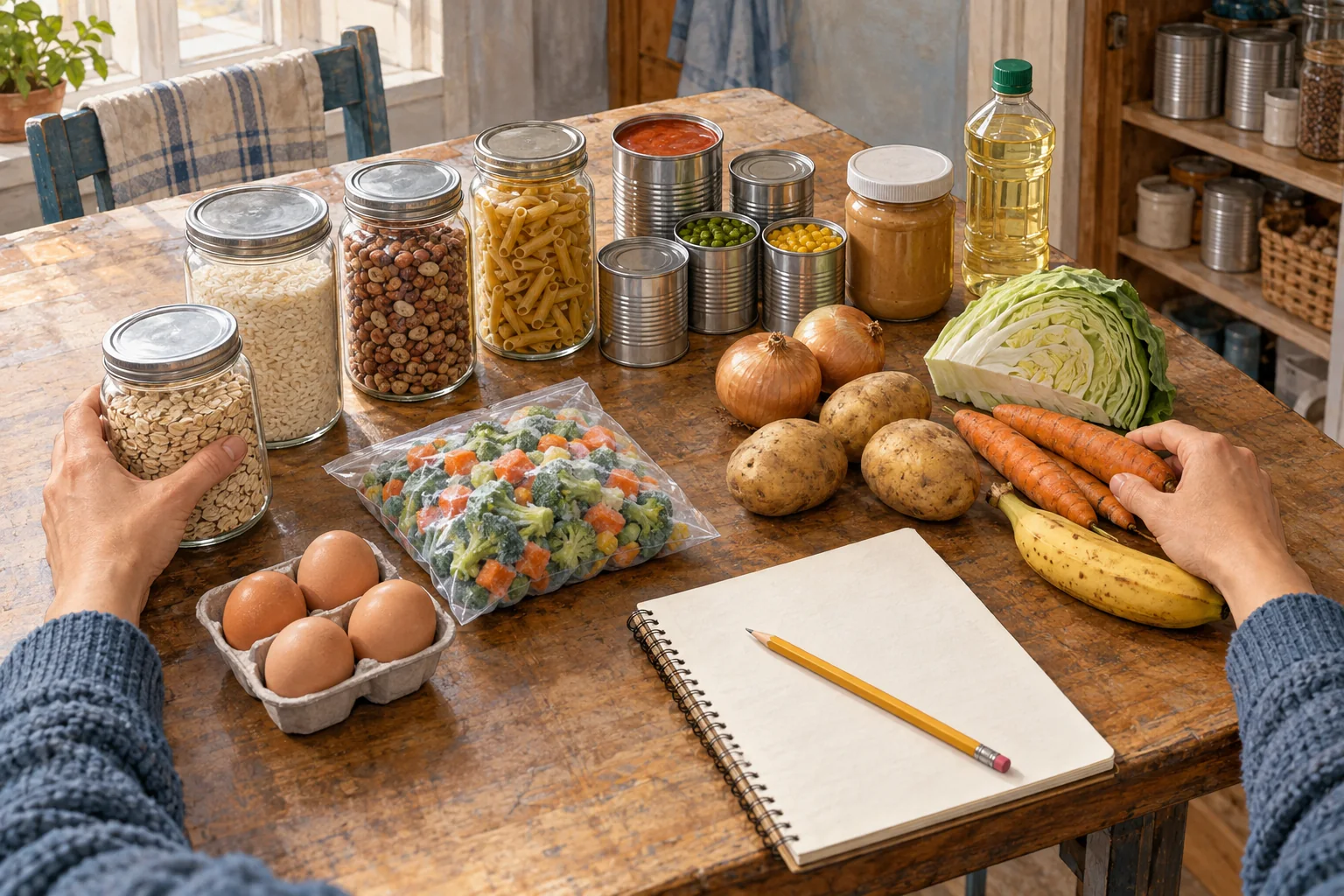
Open every cabinet, check the back of the freezer, look in the pantry behind the things nobody reaches for. Most households have more food than they realize once they take stock. Write down what you have. Group it by type: grains, proteins, canned goods, frozen items, condiments, baking supplies. This list is the foundation for this week's meals.
Plan meals from the inventory, not from recipes
Look at what you have and build meals backward. Rice plus canned beans plus a jar of salsa is a meal. Pasta plus canned tomatoes plus whatever protein is in the freezer is a meal. Oatmeal plus peanut butter plus a banana is a meal. You do not need a recipe. You need combinations that provide calories, protein, and something from a plant.
Find a food bank today
Visit FeedingAmerica.org and enter your ZIP code. Or dial 211. Most food pantries serve anyone who walks in. You do not need to prove your income. You do not need to be referred. Bring bags or boxes. Go today if one is open.
Check school meal eligibility
If you have school-age children, check whether they qualify for free or reduced-price school meals. Children in households receiving SNAP, TANF, or FDPIR automatically qualify. Other families can apply through the school district based on income. Some schools provide free meals to all students regardless of income through the Community Eligibility Provision. Contact the school office.
Apply for SNAP
Apply through your state's SNAP office. You can apply online, by phone, or in person. You will need proof of identity, income, residency, and household size. If your situation is urgent and your income and resources are very low, ask about expedited processing, which provides benefits within 7 days instead of the standard 30. Do not wait until the pantry is empty to apply. Apply today.
First 72 hours
Stretch the food budget as far as it goes.
Buy staples, not meals
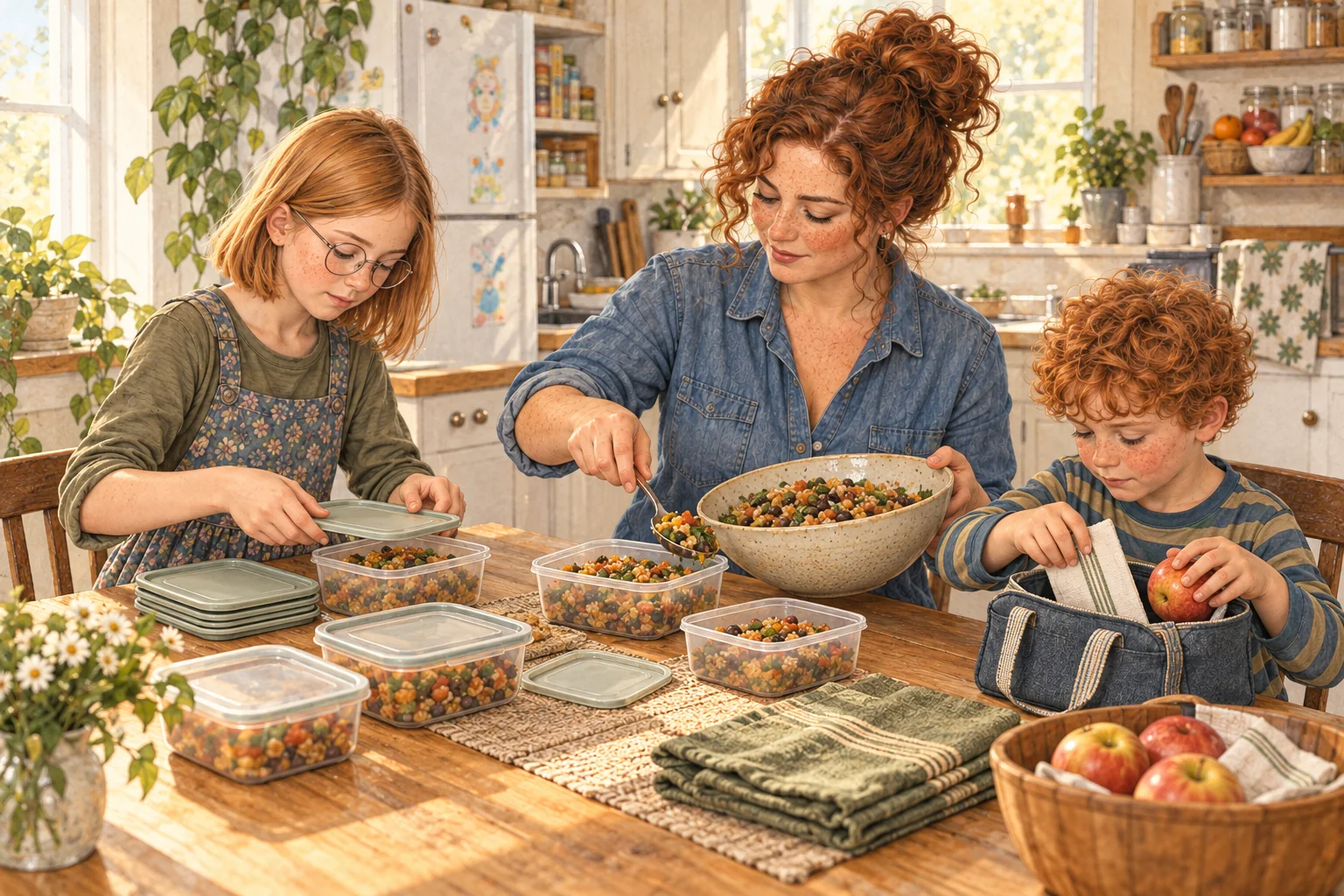
If you have any grocery money at all, spend it on ingredients that stretch: dried beans, rice, oats, eggs, peanut butter, cooking oil, flour, canned tomatoes, frozen vegetables, whole chickens, potatoes, onions, carrots, cabbage, and bananas. These foods cost less per meal than anything pre-made and produce more servings per dollar.
Cook in batches
A large pot of beans and rice feeds a family for two or three days. A whole chicken roasted on Sunday produces dinner that night, sandwiches on Monday, and soup from the bones on Tuesday. Batch cooking saves time, fuel, and food. It also means there is always something ready when someone is hungry.
Eliminate waste
When food is scarce, nothing gets thrown away. Vegetable scraps make broth. Stale bread becomes croutons or breadcrumbs. Overripe fruit goes into oatmeal or smoothies. Leftovers from dinner become lunch. The USDA estimates American households waste 30 to 40 percent of their food supply. When the budget is tight, that number needs to approach zero.
Check for WIC eligibility
The Special Supplemental Nutrition Program for Women, Infants, and Children (WIC) provides food, nutrition education, and healthcare referrals for pregnant and postpartum women, infants, and children up to age 5. Income eligibility is set at 185% of the federal poverty level. WIC and SNAP can be used together. Apply through your state WIC office or a local WIC clinic.
Ask your community
Churches, mosques, synagogues, and community organizations often run meal programs, food pantries, or mutual aid networks that do not appear on any government list. Ask a neighbor. Call a local church. Check community bulletin boards. The help that is closest is often the help that arrives fastest.
Check for senior meal programs
If anyone in the household is 60 or older, the Older Americans Act funds congregate meal programs and home-delivered meals (Meals on Wheels) through local Area Agencies on Aging. Contact your local AAA or call the Eldercare Locator at 1-800-677-1116.
First 30 days
Build a system, not just a meal.
Plan meals by the week, shop by the list. A weekly meal plan built around 10 to 15 staple ingredients eliminates impulse buying and reduces waste. Write the plan on Sunday. Shop once. Cook in batches. Repeat what works.
Learn five cheap meals your household will eat. Not 50. Five. A rice-and-beans base with different seasonings. A simple soup. A pasta with vegetables. A stir-fry. Breakfast for dinner (eggs, toast, fruit). Five meals on rotation, with small variations, is a system that works for weeks.
Use SNAP at farmers markets. Many farmers markets accept SNAP EBT cards, and some offer Double Up Food Bucks programs that match your SNAP dollars for fresh produce. Check USDA's SNAP retailer locator or ask at your local market.
Grow something. Even in an apartment, a few containers on a windowsill or balcony can produce herbs, lettuce, or cherry tomatoes. In a yard, a 4x8 raised bed can produce meaningful amounts of food over a season. Growing food is not a solution to this week's problem. It is a hedge against next month's.
Address the root cause. A food budget crisis is usually a symptom of an income crisis. If you lost your job, see our job loss guide. If rent consumed the food money, see our rent and mortgage guide. Solving the food problem without solving the income problem means being back here next month.
Decision points
Choices that come up fast.
Food bank or SNAP?
Both. They are not mutually exclusive. Use food banks for immediate need while SNAP processes. SNAP takes up to 30 days for standard applications (7 days expedited). Food banks have no application period. Use both for as long as you need them.
Feed the household or pay a bill?
Feed the household. A late fee on a credit card costs money. Not feeding your family costs more. When every dollar is allocated and something has to give, food for the people in your house comes before minimum payments on unsecured debt.
Cook from scratch or buy cheap prepared food?
Cook from scratch when you can. A pound of dried beans costs under $2 and feeds a family for multiple meals. The equivalent in canned or prepared form costs three to five times as much. But if time, energy, or kitchen access is the constraint, canned and frozen foods are a legitimate bridge. The goal is fed, not perfect.
Tell the children or shield them?
Children notice changes. You do not need to share the budget details, but you can involve them in age-appropriate ways: cooking together, helping plan meals, growing herbs. Framing it as a project rather than a problem keeps the household feeling capable rather than anxious.
What this crisis could break next
The dominoes that do not have to fall.
Health
Poor nutrition weakens the immune system, disrupts sleep, and worsens chronic conditions. Prioritize protein and vegetables over empty calories, even on a bare-bones budget. If anyone in the household is managing diabetes or another diet-sensitive condition, maintain those dietary requirements as closely as possible.
Children's school performance
Hungry children cannot concentrate. If your children are not enrolled in the free or reduced lunch program, apply this week. Summer meal programs operate through schools and community sites when school is out. Find them at the USDA's Summer Meals site or by texting "FOOD" or "COMIDA" to 304-304.
Utilities
If the food budget is gone, the utility budget may be next. Losing electricity means losing the refrigerator, which means losing whatever food you have. Contact your utility company about payment plans before a shutoff is threatened. LIHEAP can help with heating and cooling costs.
Steadiness
Food insecurity is stressful in a way that affects everything else: sleep, patience, problem-solving, relationships. Eating at regular times, even small amounts, stabilizes mood and energy. Do not skip meals to stretch supplies. Eat smaller portions at consistent times instead.
Documents you may need
For SNAP and other applications.
You can apply for SNAP without having every document ready. Start the application and submit documentation as you gather it. Do not let a missing document stop you from filing.
Help and resources
Where to find food help.
Feeding America
Find a food bank or pantry near you by ZIP code. The largest hunger-relief network in the country.
211 local assistance
Dial 211 or visit 211.org. Food pantries, meal programs, utility help, and other local services searchable by ZIP.
SNAP eligibility
Check income limits and apply for SNAP food assistance through the USDA Food and Nutrition Administration.
WIC
Nutrition assistance for pregnant women, new mothers, infants, and children up to age 5. Income limit: 185% of federal poverty level.
Summer meals for kids
Free meals for children when school is out. Text "FOOD" or "COMIDA" to 304-304 to find a site near you.
Benefits.gov
Screen for all federal and state benefits in about 10 minutes. Covers food, housing, utilities, healthcare, and more.
Every one of these programs exists because food insecurity is a common part of financial disruption. Using them is practical, not personal. The households that recover fastest are the ones that use every resource available while they work on the underlying problem.
When a disaster causes this
Feeding the household after a disaster.
Disasters destroy food supplies, close grocery stores, and interrupt supply chains. If your food shortage was caused by a declared disaster, Disaster SNAP (D-SNAP) provides temporary food assistance to households that would not normally qualify for SNAP. D-SNAP is activated state by state after a federal disaster declaration.
If the power is out and refrigerated or frozen food has been above 40 degrees Fahrenheit for more than two hours, discard it. Foodborne illness during a disaster is a preventable emergency. See our food section for safe food handling guidance during power outages.
Adjust for your household
Your situation shapes the plan.
Infants or toddlers
Infant formula is expensive and essential. WIC covers formula, baby food, and cereal for infants. If you cannot afford formula and are not enrolled in WIC, apply immediately. Call 211 for emergency infant formula assistance. Never dilute formula to make it last longer.
Elderly household members
Older adults are eligible for SNAP under special rules with higher resource limits and medical expense deductions. Meals on Wheels and congregate meal programs through the local Area Agency on Aging provide both food and social contact. The Commodity Supplemental Food Program (CSFP) provides monthly food boxes for adults 60 and older.
No kitchen or limited cooking ability
If you are in a motel, a shelter, or a situation without a full kitchen, focus on foods that require no cooking: bread, peanut butter, canned fruit, canned tuna or chicken, crackers, nuts, fresh fruit, and individually packaged items. A hot plate or a microwave opens up significantly more options. Community meal programs serve hot meals with no kitchen required.
Diabetes or other dietary restrictions
Food insecurity and diabetes management are a particularly difficult combination. Affordable diabetic-appropriate foods include eggs, canned vegetables (low sodium), dried beans, plain oatmeal, nuts, and frozen vegetables without sauce. Some food banks have medically tailored food programs. Ask when you visit.
Rural area with limited access
If the nearest grocery store or food bank is far away, transportation becomes a food access issue. Some food banks offer mobile pantries that serve rural areas on a rotating schedule. Check with your county extension office or call 211. If you have land, even a small garden can meaningfully supplement a tight food budget over a growing season.
Recovery steps
The other side of this.
When income stabilizes, rebuild the pantry before the savings account. A two-week supply of staple foods is the first buffer between your household and the next disruption. It does not need to be expensive. Twenty pounds of rice, ten pounds of dried beans, a case of canned vegetables, oats, peanut butter, and cooking oil costs under $50 and buys weeks of insurance.
Keep the meal planning habit. The families that eat well on a budget are the ones that plan meals, shop from a list, and cook from staples. That system works at any income level. It works better than any other food strategy.
If this experience exposed a gap in your household's food knowledge (how to cook dried beans, how to make bread, how to preserve seasonal produce), that gap is worth closing. See our food section for guides on cooking from scratch, food storage, and food preservation.
This guide is part of When Money Gets Tight, which gathers all the guides for this concern in one place.