
Disruptions
Medical crisis:
the first 30 days.
A diagnosis, an injury, or a hospitalization just reordered everything. Your focus belongs on treatment and recovery. This guide handles the practical side: work, insurance, bills, and the household, so you have one less thing pulling at your attention.
Start with what matters this weekBy Dan Whelan, founder of New World Survival
Researched from government agencies, university extension services, and other published sources. See our sources
This guide is not medical, legal, or financial advice. It is a plain-language starting point for the practical side of a medical crisis: work, insurance, and household stability. Follow your medical team's guidance on treatment.
What this situation means
Two problems at once. One at a time.
A serious diagnosis, an accident, or a hospitalization creates two separate problems that arrive together: the medical situation itself, which your doctors are managing, and the logistical situation around it, which usually falls on you or your family with no warning and no training.
This guide is not about the medical decisions. Those belong to you and your care team. This guide is about everything around the medicine: keeping your job protected if possible, keeping insurance in place, understanding what the bills will actually cost, and keeping the household functioning while attention is elsewhere.
You do not have to handle all of this yourself. If you have a partner, adult child, sibling, or close friend who can take on some of these calls and forms, let them. Medical crises are exactly the situation where delegating logistics is not a weakness. It is how households get through them.
What to protect first
The five things that need attention this week.
Your job, if you have one
If you or a family member you care for is affected, FMLA may protect your position for up to 12 weeks. Notify your employer as soon as you reasonably can, even before you have all the details.
Health insurance
Do not let coverage lapse during treatment. If leave affects your employment status, confirm with HR exactly what happens to your health benefits during that leave.
Income
FMLA protects your job but does not pay you. Check for short-term disability, paid sick leave, state paid family leave programs, or PTO that can bridge the income gap.
Dependents
Children or others who depend on you need a plan for who provides care during treatment and recovery. Identify this early, even a partial plan, so it is not a scramble later.
The bills before they arrive
Ask the hospital's billing office about financial assistance before treatment if possible, or as soon as bills start arriving. Do not wait to see the total before asking about help.
First 24 hours
What actually needs to happen now.
Notify your employer
You do not need every detail to give initial notice. A simple statement that a medical situation requires you to be away, with a timeline if you have one, starts the process. Ask specifically about FMLA and any short-term disability benefits.
Confirm insurance is active
Call your insurance company or check your member portal to confirm coverage is current. Ask about prior authorization requirements for any planned procedures so you are not blindsided by a denial later.
Arrange immediate care coverage
If children, pets, or anyone else depends on daily care that you normally provide, identify who covers that today and tomorrow. A short-term plan is enough for now; you can build a longer one once the immediate crisis stabilizes.
Designate one point of contact
If family and friends want updates, designate one person to communicate with everyone else. This protects the patient and primary caregiver from repeating the same information dozens of times while managing everything else.
Start a folder
Physical or digital, one place for insurance cards, provider names, medication lists, and discharge paperwork. This folder will grow. Starting it now saves hours of searching later.
First 72 hours
Build the logistics.
Formally request FMLA, if applicable
If you have worked for your employer at least 12 months, logged at least 1,250 hours in the past year, and the employer has 50 or more employees within 75 miles, you likely qualify. HR must respond to your request within 5 business days and will provide required forms for medical certification.
Check for state paid family and medical leave
FMLA is unpaid. Many states now run their own paid family and medical leave programs that provide partial wage replacement during qualifying leave. Check your state labor department's website, since eligibility and benefit amounts vary widely by state.
Ask the hospital about financial assistance
Nonprofit hospitals are required by federal law to maintain a written financial assistance policy, often called charity care. Ask the billing office for the application. Many programs provide free care to households at or below 200% of the federal poverty level, with discounts extending higher. You can apply even after receiving a bill.
Build the bare-bones household budget
If income is reduced during leave, list essential expenses and identify what can pause. This is the same exercise as any income disruption. See our job loss guide for the full breakdown.
Ask about a hospital social worker or case manager
Most hospitals have social workers who can help connect patients to financial assistance, home health services, transportation resources, and community programs. Ask your nurse or the front desk to request one. This service is typically free.
Understand your medication access
If new medications are expensive, ask the prescribing doctor or hospital pharmacist about generic alternatives and manufacturer patient assistance programs. Many pharmaceutical companies offer free or reduced-cost medication for patients who qualify based on income.
First 30 days
Manage the ongoing reality.
Review every bill line by line. Medical billing errors are common. Compare each bill against your insurance's Explanation of Benefits (EOB). If something looks wrong, duplicate charges, services not received, incorrect codes, call the billing office and ask for an itemized statement before paying.
Apply for financial assistance before the bill goes to collections. Federal rules generally give you at least 120 days after the first post-discharge bill before a nonprofit hospital can send your account to collections or report it to credit bureaus. Submit the financial assistance application, and follow up in writing that an application is pending, which typically pauses collection efforts.
Negotiate what is not covered by assistance. Even if you do not qualify for full charity care, hospitals will often negotiate a payment plan or a reduced lump-sum settlement, particularly for uninsured or underinsured balances. Ask directly what discount is available for prompt payment or a structured plan.
Explore disability benefits if leave extends. If the medical situation prevents you from working for an extended period, ask HR about long-term disability coverage if your employer offers it. If none is available and the condition is severe and long-lasting, Social Security Disability Insurance (SSDI) may apply, though the approval process typically takes months.
Reassess the household routine. A medical crisis changes what the household can realistically manage. Simplify where possible: fewer commitments, easier meals, more help accepted. This is a season, not a permanent state, and treating it that way reduces the pressure to perform normalcy that is not available right now.
Decision points
Choices that come up along the way.
Use FMLA now or save it for later?
FMLA provides 12 weeks in a 12-month period. If the condition may require multiple treatment phases, ask HR whether intermittent leave is an option so you are not forced to use the full block at once.
Decision guide coming soon
Financial assistance or a payment plan?
If your income qualifies, financial assistance eliminates or reduces the bill outright. If it does not, a structured payment plan, often interest-free at nonprofit hospitals, spreads the cost without accumulating debt at a high interest rate.
Decision guide coming soon
Accept outside help or manage alone?
Meal trains, ride coordination, childcare help from friends and community. Accepting this help is not a burden on others; for most people, being asked to help during someone else's crisis feels like a privilege, not an imposition.
Home care or facility care during recovery?
This depends heavily on the medical situation and should be discussed directly with the care team and hospital discharge planner, who can advise on what level of care the recovery actually requires and what insurance will cover.
What this crisis could break next
The dominoes that do not have to fall.
Household income
Reduced or unpaid leave affects the household budget quickly. See our rent and mortgage guide and feeding the household guide if the reduced income puts pressure on housing or food.
Children and dependents
A parent's medical crisis affects children even when they are not told the details. Keep routines stable where possible, and consider looping in the school counselor if the situation is significant or ongoing.
The caregiver's own health
If you are the primary caregiver rather than the patient, your own health and sleep matter too. Caregiver burnout is a real and common outcome of sustained medical crises. See our caregiving guide for support specific to that role.
The job, if leave extends
If recovery extends beyond FMLA's 12-week limit, understand your position before the deadline arrives. Talk to HR early about extension possibilities, disability transition, or accommodations under the Americans with Disabilities Act if the condition qualifies.
Documents you may need
Gather these as you go.
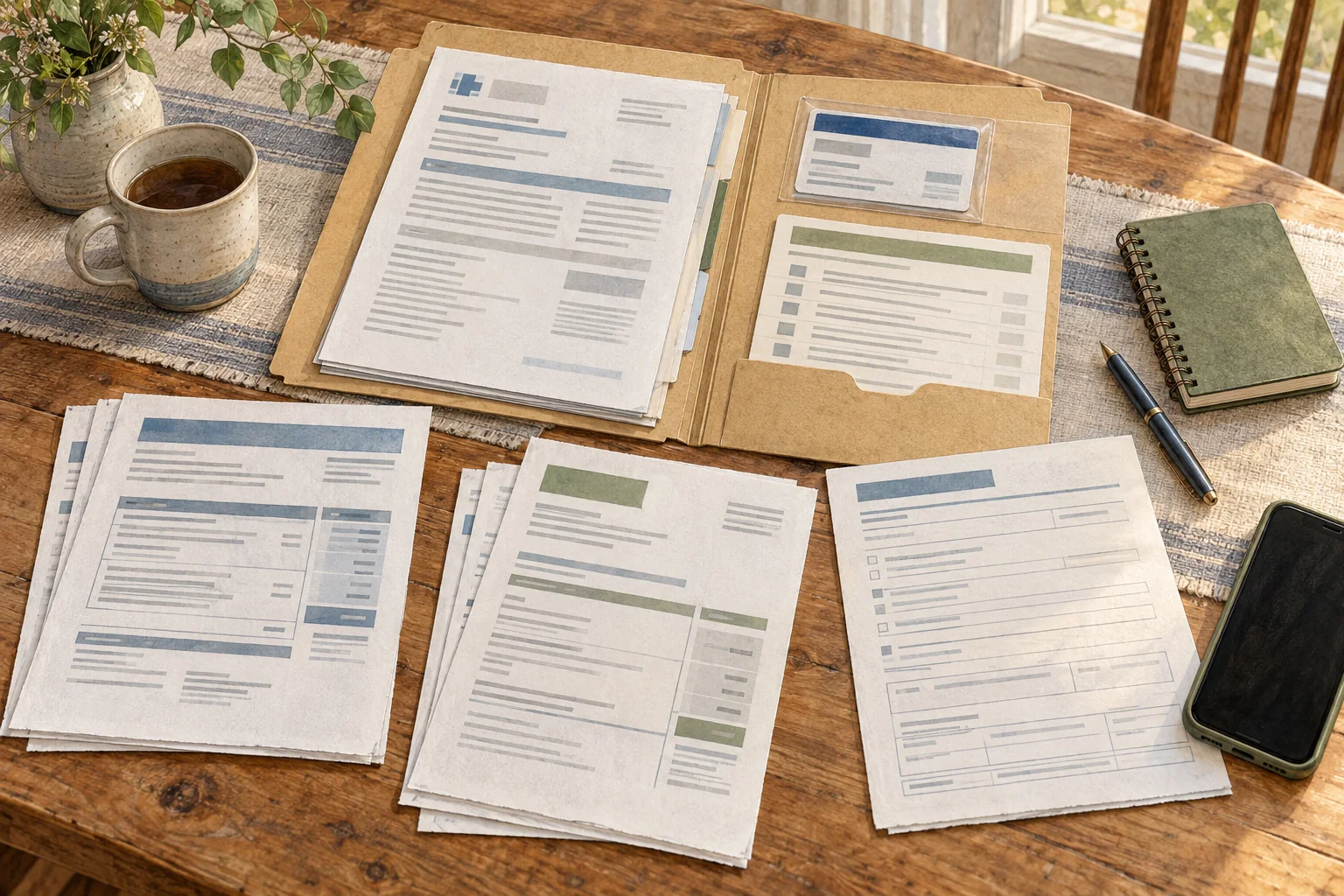
Keep bills and their corresponding EOBs together. Comparing them is how billing errors get caught.
Help and resources
Where to find help.
FMLA information
Department of Labor's official FMLA guidance and eligibility details. Call 1-866-487-9243 with questions.
Hospital financial assistance
How nonprofit hospital charity care policies work under federal law. Ask your hospital's billing office for their specific application.
Social Security Disability
SSDI information and application for long-term, severe medical conditions that prevent work.
Healthcare.gov
Marketplace coverage options if employment or insurance status changes during your medical crisis.
NeedyMeds
Directory of patient assistance programs for prescription medication costs, searchable by drug name.
211 local assistance
Dial 211 for local transportation, meal support, and financial assistance programs during a medical crisis.
When a disaster causes this
Injury during a disaster.
If your medical crisis resulted from a federally declared disaster, FEMA's Individual Assistance program may provide funds toward medical and dental expenses not covered by insurance. Apply at DisasterAssistance.gov.
If normal healthcare access is disrupted by the disaster itself (closed pharmacies, damaged hospitals, evacuation), Disaster Medical Assistance Teams and temporary care sites may be operating in your area. Check state emergency management channels and see our local risks section for hazard-specific guidance.
Adjust for your household
Your situation shapes the plan.

Self-employed or a small business owner
FMLA does not apply if you are self-employed. Check whether you have an individual disability policy. Otherwise, focus on the household budget and assistance programs, since there is no employer-based safety net to lean on.
Uninsured
Charity care and financial assistance are not limited to insured patients; uninsured patients are frequently the group these programs are designed for. Apply directly and immediately. A medical crisis is also a qualifying event for a Special Enrollment Period on the ACA marketplace, giving you 60 days to enroll.
Small employer (under 50 employees)
Federal FMLA does not apply, but check your state, since a growing number of states have their own paid family and medical leave laws that cover smaller employers or apply regardless of company size.
Single parent
Childcare coverage during your own medical crisis is the most urgent logistical gap. Lean on your support network immediately and ask the hospital social worker about emergency childcare resources in your area.
Caring for a child with the medical crisis, not yourself
FMLA also covers caring for a seriously ill child. The same job protection and financial assistance principles apply. See our caregiving guide for the caregiver-specific side of this.
Recovery steps
The other side of this.
When treatment concludes or stabilizes, the return to work and routine deserves the same care as the crisis itself. If work resumes, discuss a phased return with your employer if the recovery is ongoing. FMLA entitles you to return to your same or an equivalent position, not a demotion.
Once the bills are resolved, whether through financial assistance, insurance, or a payment plan, review what happened for lessons that help next time: adequate emergency savings, understanding your insurance coverage before you need it, and knowing where your important documents live.
A medical crisis often reveals gaps in household emergency planning that were invisible before. If this experience showed you a gap, building a plan for it now, while it is fresh, is worth the time. See our planning section for household emergency planning guides.
This guide is part of When Health Is the Worry, which gathers all the guides for this concern in one place.