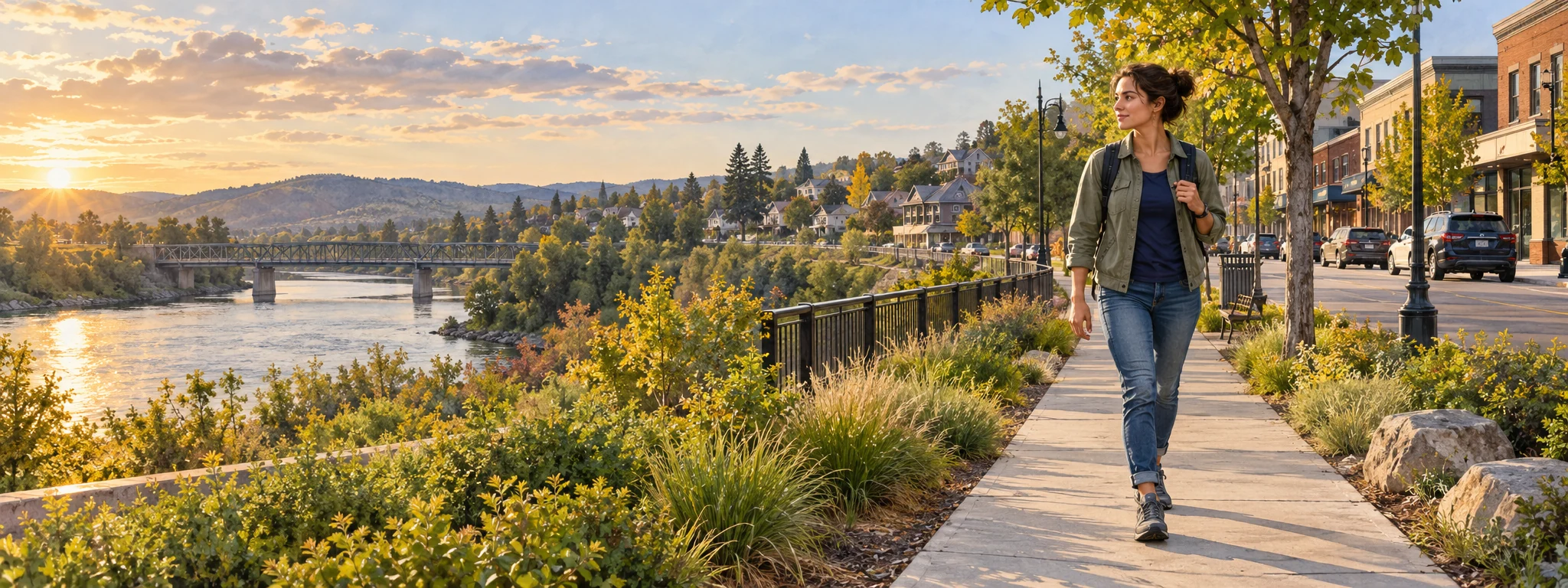
Transportation
Getting home when you are away.
Most emergencies do not find you at home. They find you at work, on the road, or across town. A little planning means a stalled car or a closed road is an inconvenience, not a crisis.
The scenario
A normal day that does not go to plan.
The car will not start in the work parking lot. The trains stop mid-commute. A storm closes the road between you and home. None of these are disasters. They are ordinary failures of the systems that move you around, and they happen to everyone eventually.
The goal is simple and calm. Get yourself home, or to safe shelter, under your own power, without depending on a tow truck arriving or a phone that still has signal. That is the whole idea behind a get-home plan.
You do not need a heavy pack or special equipment. You need a few sensible things where you already are, and a little thought given in advance to how you would actually get back.
In the vehicle
What lives in the car.
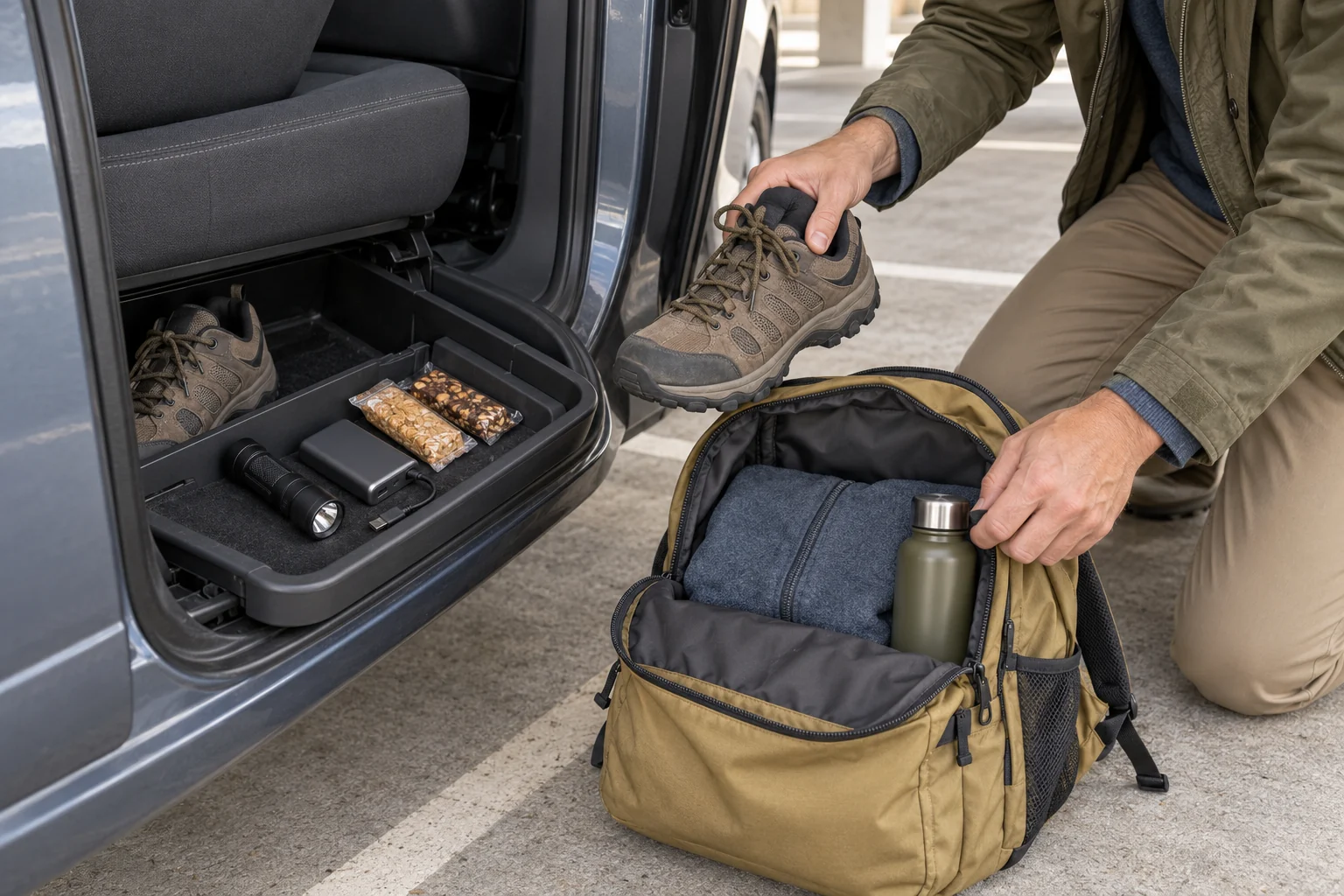
Most of getting home is already in your trunk if you keep a basic vehicle kit. Add a small set of get-home items to it and you are covered for the times you have to leave the car behind.
Keep water and a way to treat more, a warm layer that suits the season, and a pair of shoes you can actually walk miles in. Add a charged power bank and cable, a flashlight, a few dense snacks, and a written card with your key contacts and meeting points in case your phone dies.
This rides alongside your everyday vehicle emergency kit, which handles the car itself, the jumper pack, the warning triangle, the basic repairs.
On you
The bag you already carry.
If you do not drive, or the car is not always with you, the same thinking applies to the bag you carry every day. A purse, a backpack, a work tote. Nothing special, nothing that announces itself.
A small water bottle, a phone charger, a snack, any daily medication, a compact flashlight, and the same written contact card. If you take medication on a schedule, a day or two of a backup supply in the bag is the single most valuable thing you can carry.
The point is not to walk around equipped for the wilderness. It is to never be completely empty-handed when an ordinary day stretches longer than expected.
On foot
Could you walk it?
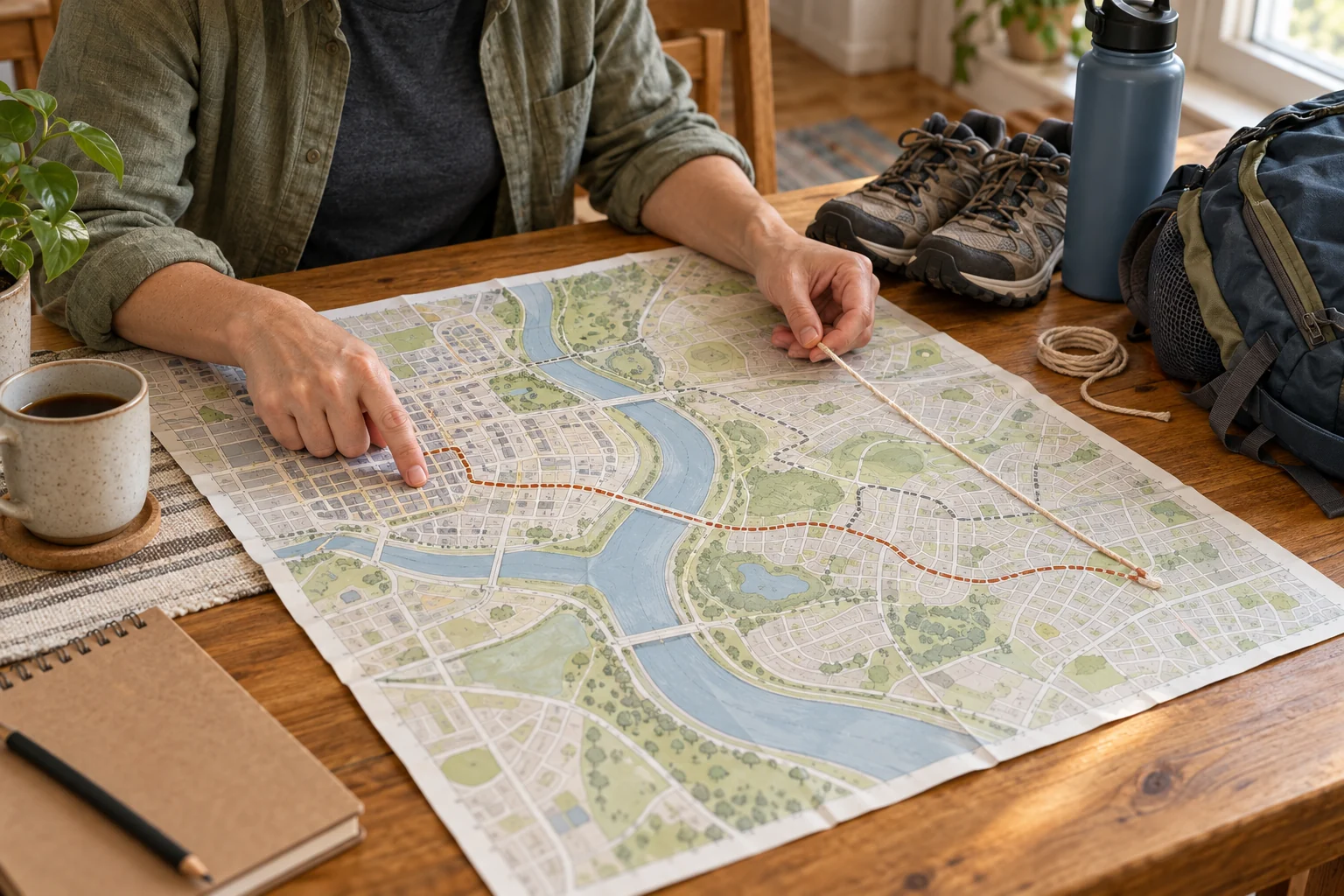
Look at the distance between the places you spend your days and home. If the roads closed and the trains stopped, could you cover it on foot? For many people the honest answer is yes, given a few hours and the right shoes.
Think it through once, before you ever need to. Roughly how far is it, and how long would it take at a steady walk. Which route would you take, and where could you stop to rest, refill water, or shelter if weather turned. Knowing this in advance removes the hardest part, which is deciding under stress.
If the distance is too far to walk, that is useful to know too. It tells you to lean harder on the next part of the plan.
Staying put
When the answer is stay where you are.
Sometimes getting home is the wrong move. The route is unsafe, the weather is severe, or the trouble sits between you and home. In those moments, sheltering where you are and waiting it out is the calm, correct choice.
That is why the get-home plan depends on a communication plan. Agree on an out-of-area contact every household member can call or text, since a distant line often works when local ones are jammed. Set a meeting point near home and a second one farther out. Write it on the same card that rides in your bag and car.
The communications guide covers how households stay in touch when cell service fails, and the first 72 hours plan is where the written contact card and meeting points come together.