Food · Getting Started
Six habits before everything else.
Food self-reliance does not begin with acreage, specialized equipment, or years of preserved meals. It begins with six practical habits that apply to every kitchen, every household, and every budget.
See the six foundationsBy Dan Whelan, founder of New World Survival
Researched from government agencies, university extension services, and other published sources. See our sources
Why these six
The foundation that every cluster shares.
The Food section covers gardening, preservation, livestock, foraging, fishing, cooking, and traditional food crafts. Seven clusters, dozens of guides. Every one of them assumes you already know how to shop with intention, how to read what is on the package, how to keep food safe, how to rotate what you buy, how to maintain a working pantry, and what changes when normal supply is interrupted.
These are not exciting topics. They do not photograph well. Nobody starts a blog about FIFO rotation. But they are the difference between a household that absorbs a bad week without changing its diet and one that throws away a refrigerator full of food after a two-day outage.
Read these six guides in order if you are new. If you have been cooking and storing food for years, scan them anyway. The food safety guide alone catches at least one misconception in almost every kitchen.
The six foundations
A sequence, not a collection.
Each step builds on the one before it. You can open them in any order, but the progression is intentional.
Start here
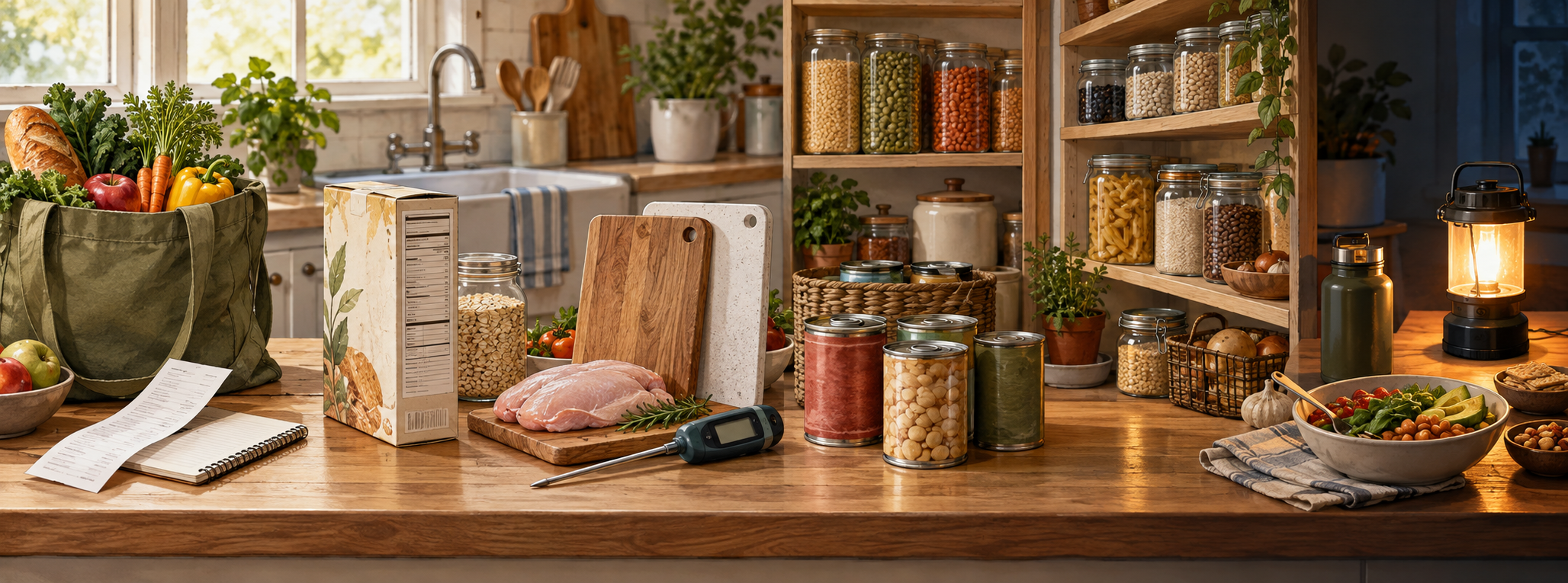
Shop with intention
A list, a unit price, and the difference between store brand and name brand. The habits that determine what actually makes it into the pantry, before anything else on this page applies.
Shopping guide →
Next
Know what you're buying
The Nutrition Facts panel, the ingredient list, and what date labels actually mean. Most food isn't unsafe just because a date passed.
Label reading guide →
Then
Keep food safe
The danger zone, cross-contamination, cooking temperatures, and the power-outage food decision: what to keep, what to toss, and when. Every other food skill assumes this knowledge.
Food safety guide →
Next
Store what you use
The first-in-first-out method that turns an ordinary pantry into a two-week reserve at no extra cost. Rotation for food, water, and household goods.
Rotation guide →
Then
Build a working pantry
Building a pantry from foods your household already eats, tracking inventory, cooking from stored ingredients, and adapting storage for dietary needs.
Pantry guide →
Finally
Prepare for disruptions
What changes during outages, shortages, and supply interruptions. Consumption order, stretching limited supplies, and feeding a household under pressure.
Disruptions guide →
The starting point
You probably have more than you think.
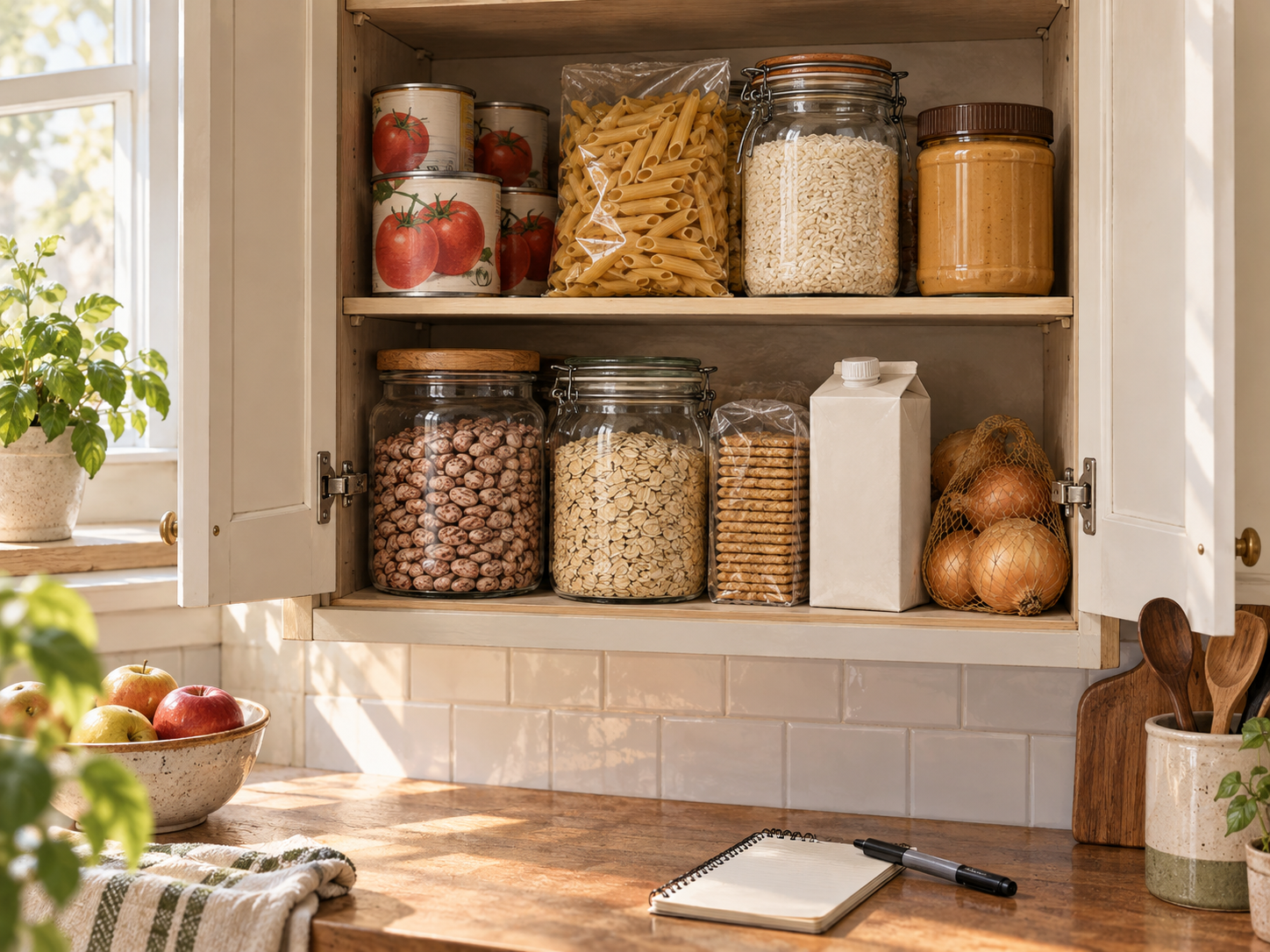
Most households already keep three to five days of food on hand without thinking of it as a reserve. The canned tomatoes behind the pasta. The rice in the cupboard. The peanut butter nobody finished. The bag of dried beans someone bought and forgot about.
The work here is not buying a pallet of freeze-dried meals. It is recognizing what you already have, organizing it so nothing expires unseen, and deepening it by one or two items each grocery trip until a bad week is something your kitchen absorbs without a second thought.
No special room. No special containers. No lifestyle change. Just a slightly deeper version of what your household already does, managed with a little more intention.
Where this leads
Once the foundation is set, pick a direction.
Safe food practices, a rotating pantry, and a basic disruption plan open the door to every other food skill. These are the clusters you can explore next.
All seven clusters are mapped on the main Food hub.
Your first step
Start with food safety.
It takes fifteen minutes to read. It applies to every kitchen. And it catches at least one thing most households are doing wrong.
Food safety guide