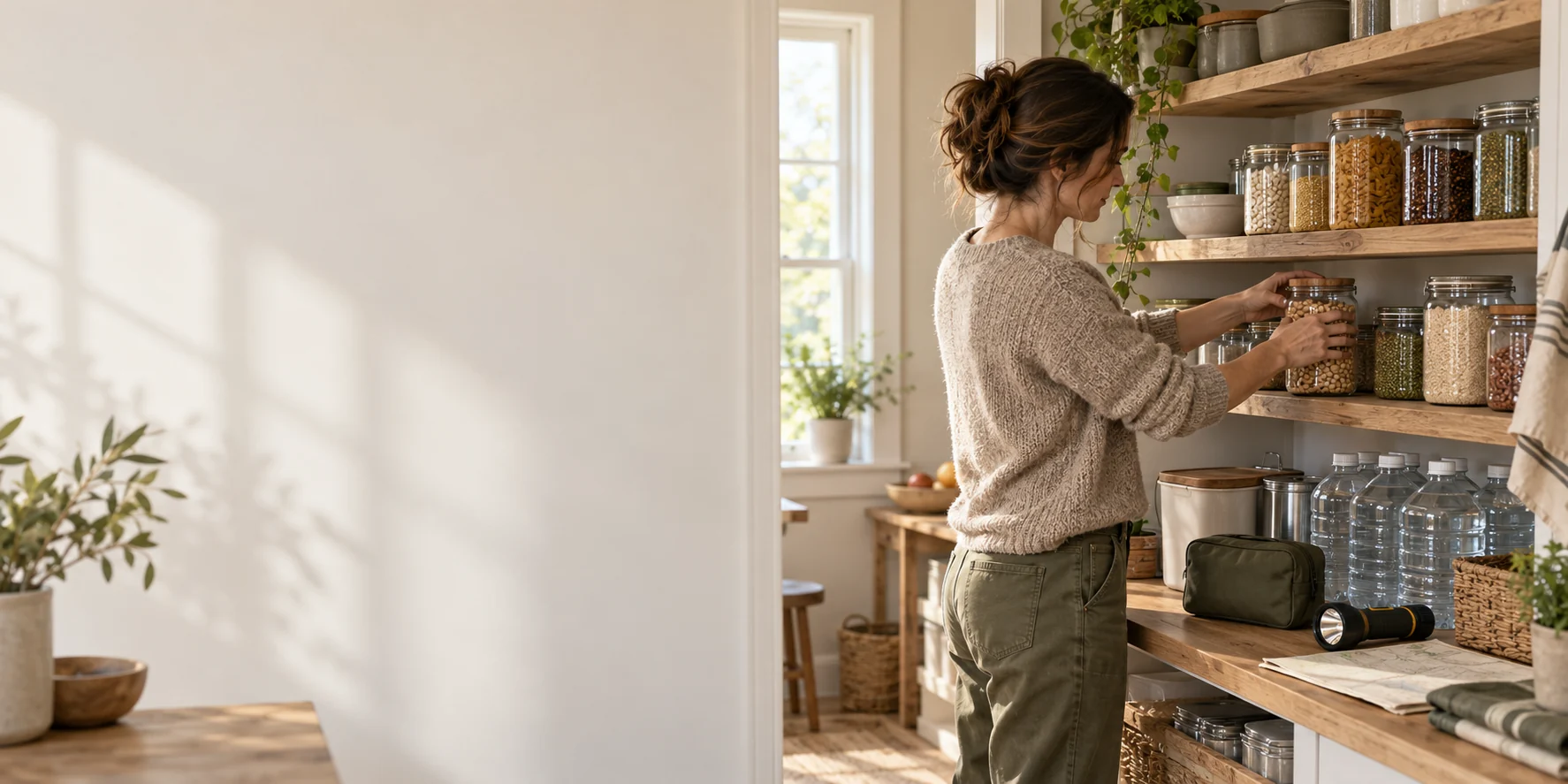
Getting started
What is prepping? A calm, practical guide.
The word carries a lot of television baggage. The practice is quieter than that, and most households are already partway there without knowing it.
By Dan Whelan, founder of New World Survival
Researched from government agencies, university extension services, and other published sources. See our sources
FROM THE FIELD
In account after account, people describe the same quiet recognition: they were already doing this. The deep pantry was a family habit. The cash in an envelope was a lesson from a hard year. The freezer that stays full, the car that never drops below half a tank. The word "preparedness" arrived later, and it rarely added anything the practice had not already provided.
The plain answer
Prepping is household preparedness.
Prepping means keeping enough water, food, light, medicine, and money on hand, plus a plan your household has talked through, so that a disruption becomes an inconvenience instead of a crisis. That is the whole definition.
If you have a flashlight you can find in the dark, a few days of food in the pantry, and a smoke alarm that works, you are already doing it. Preparedness is a spectrum of small habits, not a lifestyle you join.
On this site we usually say household preparedness rather than prepping. That word describes a label. Preparedness describes a practice, and the practice is what matters.
Three households
What preparedness actually looks like.
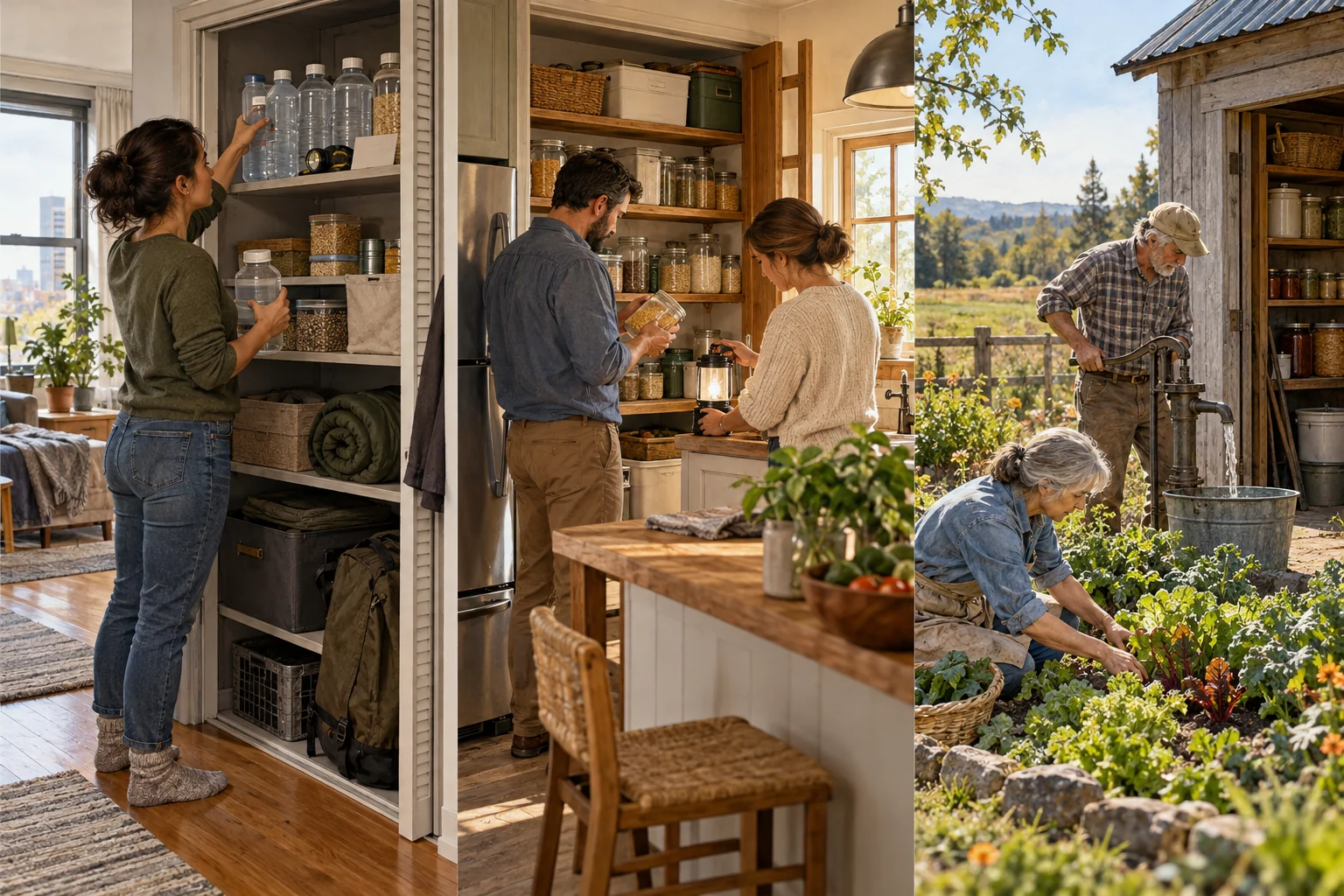
The renter with a closet shelf
A fourteen-hour blackout last winter got her attention. Now one shelf holds two cases of water, a bin of food that needs no cooking, a headlamp, and a paper list of phone numbers. That shelf covers three days, and it took one Saturday afternoon to build.
The family that rode out a long outage
An ice storm took their power for six days. They ate from the pantry, heated water on a camp stove on the porch, and kept the kids on a near-normal routine. Nothing about their house looks unusual. The difference was a deeper pantry and a plan they had actually discussed.
The rural couple with a well and a garden
Twenty years on the same land, a hand pump on the well, a garden that feeds them half the year. They would never describe themselves that way. They would tell you they just live a little further from the store, so they keep a little more on hand.
Same practice, three depths. Where you land on that spectrum depends on your home, your hazards, and how far you care to take it. All three of these households are prepared.
The reasons
Why households prepare, in practice.
Not fear. Weather. The most common reason a household reaches for its supplies is an ordinary power outage or a winter storm, the kind that arrives a few times a decade almost everywhere in the country.
The second most common reason never makes the news. A job loss, a medical event, a furnace that dies in January. A stocked pantry and a small cash buffer carry a household through these far more often than through any disaster.
Most Americans have already acted on this. FEMA's 2024 National Household Survey found that 83 percent of adults took three or more preparedness actions in the past year, up sharply from 57 percent the year before. Preparedness is the norm, not the fringe.
From the field · Accounts consistently trace preparedness back to hardship, not hobby. A layoff, a childhood without much, a week without power in a house that was not ready. The people who practice this most naturally are the ones who learned it the hard way.
The same survey names the biggest barrier: cost, cited by about a quarter of respondents. That concern is fair, and it is answered further down this page with real numbers.
Clearing the air
What preparedness is not.
Television found the most extreme version of this practice and filmed it, because bunkers make better episodes than pantries. That version exists, but it describes almost no one who keeps stored water and a written plan.
Preparedness is not a prediction that the world is ending. It is the opposite: a bet that life continues, and that the storm, the outage, or the tight month is a chapter to get through in reasonable comfort.
It is not paranoia, either. Checking your smoke alarms is not fear of fire, and storing water is not fear of drought. Both are just maintenance on a household that intends to keep running.
We wrote a fuller statement of what this site means, and does not mean, by preparedness. It is worth five minutes: why preparedness, in our words.
From the field · The stigma is not imaginary. Accounts describe eye-rolls at work, the "are you one of those" question from a relative, the fatigue of explaining that a pantry shelf is not a bunker. Most people who prepare manage it by never using the word.
The framework
Think in timeframes, not gear.
The useful question is never "what should I buy." It is "how long could my household run on what we have." Four timeframes organize the entire answer, and this site is built around them.
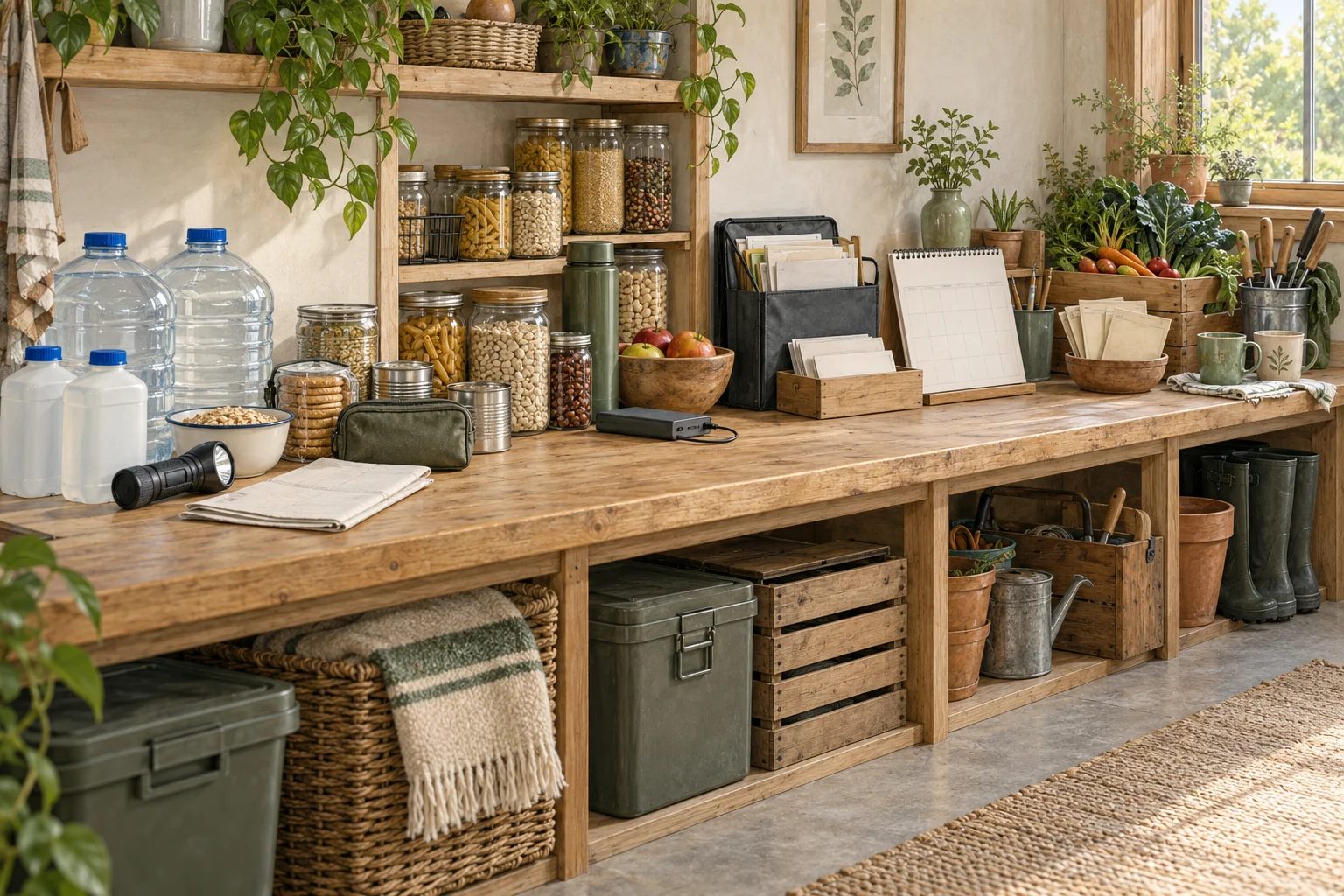
The first 72 hours. Water, light, food that needs no cooking, medicine, and a written plan. This is the weekend project, and it covers most short disruptions outright.
The first two weeks. A deeper pantry, more water, backup power for phones and medical devices. The level most emergency agencies recommend, and the level we think most households should reach.
The first three months. Systems rather than supplies: documents, insurance, a financial buffer, and the routines that keep a long disruption from compounding.
Long-term resilience. Skills, gardens, energy independence, community ties. Entirely optional, genuinely rewarding, and never the place to start.
These are timeframes, not ranks. Nobody graduates from one to the next. A household solid at 72 hours is prepared, full stop, and everything past that is a choice about depth.
The honest part
Where people start, and where they stall.
Almost everyone starts the same way: a case of water, a flashlight, a first aid kit. Good instincts, all three. The trouble comes next.
The first stall is overwhelm. A search for "prepping" returns a thousand lists, and trying to hold all of them at once is how people quit in week two. The fix is sequence: cover 72 hours completely before reading anything about month three.
The second stall is spending. Gear is the fun part, so people buy a $300 gadget before they own $15 of stored water. Our guide on preparing without wasting money covers the real costs and what to skip. In practice a complete 72-hour foundation costs about $50 to $150 for most households, and a fair share of that is food you would eat anyway.
The third stall is buying before planning. Supplies answer "what do we have." A plan answers "what do we do," and the plan is free. Our guide on how to prioritize lays out the sequence in detail.
Where this site comes in
Sequenced guidance, not another list.
New World Survival exists to solve the stall points above. The readiness review tells you where your household actually stands, so you skip what you have already covered and start where the gap is.
From there, My Situation tailors the guidance to your home, your region's hazards, and the people you live with. Your progress is tracked, so you always know the next step instead of guessing.
The guides themselves live under Getting Started and the four timeframe pages above, sequenced so the high-value work comes first. No fear, no identity, no thousand-item list. Just the next right step.
Common questions
Questions people actually ask.
Is prepping expensive?
It does not need to be. A solid 72-hour foundation runs about $50 to $150 for most households, and much of it is things you already own, organized. Cost climbs only as far as you choose to take it.
How much food and water should I store?
Start with three days: one gallon of water per person per day, and three days of food that needs no cooking. Then extend toward two weeks at whatever pace your budget allows.
What should I do first?
Water. A person can go weeks without food but only days without water, so stored water is the highest-value first step anyone can take. A written household plan comes next, and the plan costs nothing.
Do I need to be a homeowner to prepare?
No. The core of preparedness is supplies and decisions, not property. Renters can cover water, food, light, first aid, documents, and a plan in a single closet. Our guide for preparing in an apartment covers the specifics.
Is prepping the same as survivalism?
No. Survivalism is a lifestyle built around worst-case scenarios. Household preparedness is a habit built around likely ones. Most prepared households never use either word.
What is the difference between prepping and homesteading?
Homesteading is about producing what you use: food, energy, skills. Preparedness is about continuing comfortably when normal supply pauses. They overlap in the garden and the pantry, and plenty of households practice both without naming either.
What are the most common emergencies to prepare for?
Power outages and severe weather, followed by personal disruptions like job loss and medical events. Preparing well for a several-day outage covers a large share of everything else.
How long does it take to get prepared?
One focused weekend covers the 72-hour basics. Reaching two weeks usually takes a month or two of small, unhurried additions. There is no deadline, because this is maintenance, not a race.
One next step
Find out where you already stand.
Ten minutes, no email required, and you will know exactly which gap to close first.
Take the readiness review