Getting started
Where you live shapes what you can do.
Most people start by asking which state is best. The people who get it right start somewhere else, with a handful of plain questions that decide whether a place, or a piece of land, can actually hold the life they want. This page is where that thinking begins.
By Dan Whelan, founder of New World Survival
Researched from government agencies, university extension services, and other published sources. See our sources
From the field
In discussion after discussion, the same thing happens. Someone asks for the best state to settle, and the experienced replies do not name one. They ask what the household actually needs. Longtime rural residents also point to a gap that no amount of how-to content fills: learning to live on land and learning to judge whether a piece of land is worth buying are two different skills. This page is about the second one.
The premise
The best-state question is usually a stand-in.
People ask which state, region, or town is best for a self-reliant life because they do not yet know how to structure the decision. Ask a room of experienced landowners and they rarely name a winner. They ask you questions back. How much winter can you take? Dry climate or humid? How far from family? What does the household need to earn, grow, and reach in an ordinary week?
A state name feels like an answer. It is really a placeholder for a set of choices you have not made yet, and a state average hides enormous differences between one county and the next. The useful move is to turn the big question into smaller ones you can actually answer, in an order that keeps the project from feeling impossible.
The real questions
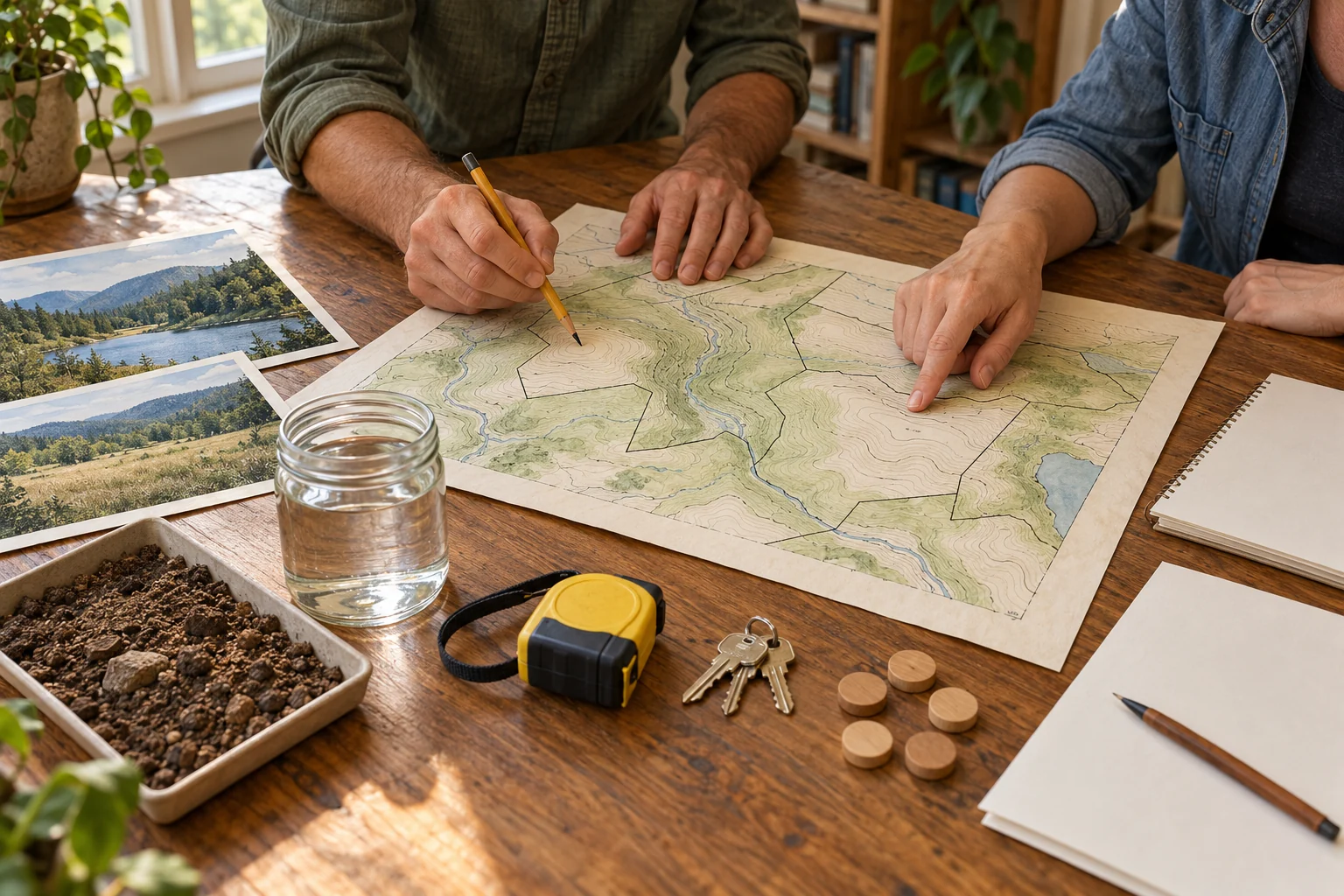
Five questions that decide almost everything.
Experienced buyers tend to narrow the whole decision to five gates. Each one sits close to pass or fail. Get one badly wrong and the place cannot do what you hoped, however good the rest of it looks. Read them as questions to sit with, not boxes to tick.
Is the water dependable and legal to use?
Not whether there is a creek or a green pasture. Whether water can be proven: a well that yields year round, rights that transfer, rain you are allowed to collect, or a supply you can reach without an unsustainable haul. This is the gate almost every experienced buyer checks first.
Can you legally do what you intend?
Rural is not the same as unrestricted. Zoning, health rules, building codes, occupancy limits, and deed restrictions can quietly block a plan, even on remote ground. A seller's word is not confirmation. The county is, in writing, before you commit.
How much of the land can actually be used?
Forty acres of steep slope, wetland, rock, and floodplain may hold one small buildable bench. Two flat, well drained, sunny acres near a good road can do more. Count the usable ground and what each part must support, not the deeded number on the listing.
What will it cost once it can be lived on?
The purchase price is the easiest number to find and the least useful on its own. Access, a well, septic, power, clearing, drainage, permits, and a first shelter can rival or exceed the land itself. Compare finished sites, not price per acre.
Can the nearby community support a whole life?
A pretty main street is not the same as a working town. Ask whether the clinic, pharmacy, grocery, school, trades, and jobs are still there, and whether they will be in ten years. The land and the town are one decision, not two.
None of these has a quick answer, and that is the point. A place that clears all five is worth pursuing. A place that fails one is worth walking away from early, before the search costs you money or heart.
What people learn the hard way
Three ideas that change how you look.
The land and the town are one decision.
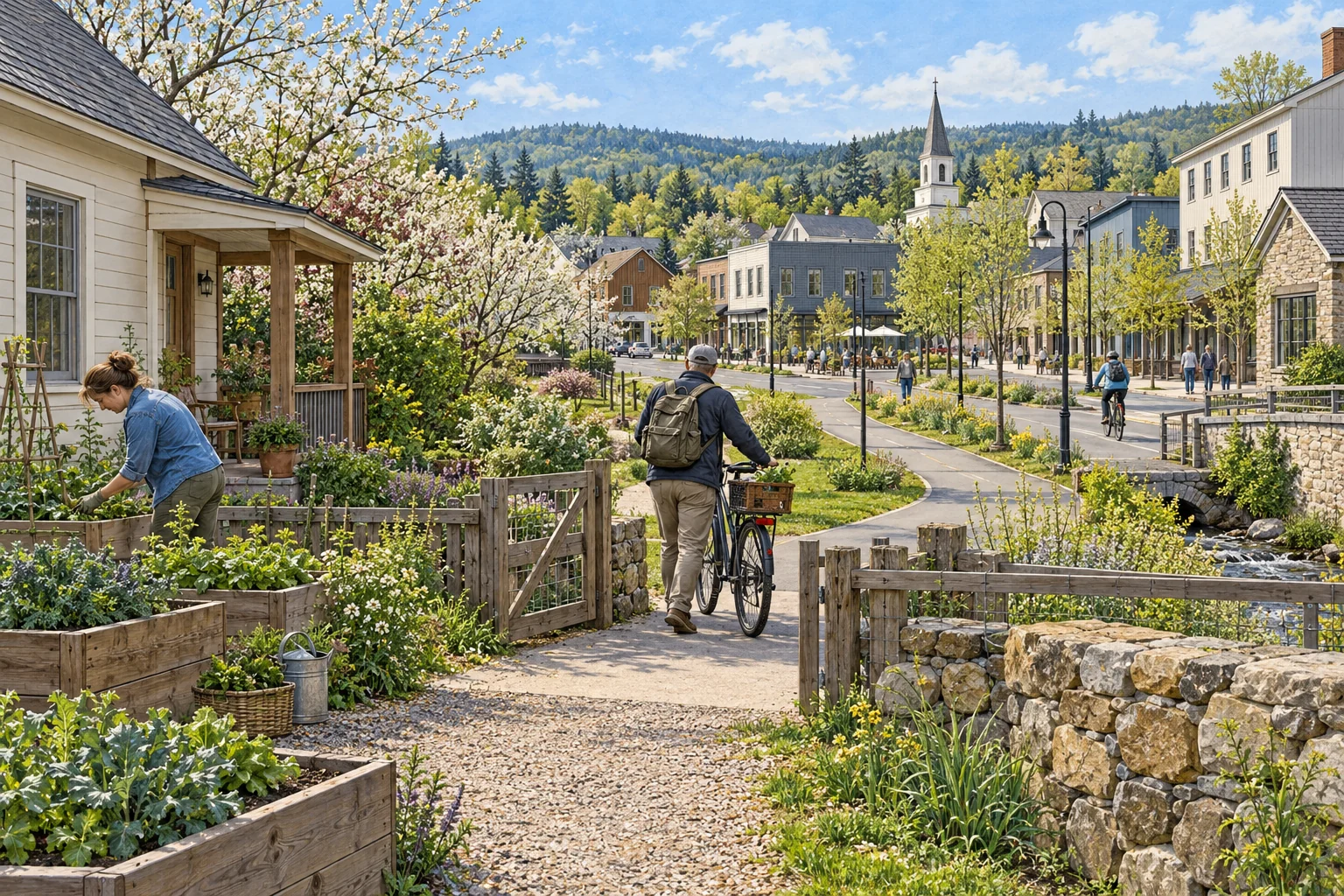
Cheap land beside a hollowed-out town with no healthcare, work, or trades can be less resilient than a smaller, dearer parcel near a place that still functions. A good town does not rescue a parcel with no legal water or recorded access. A good parcel does not rescue a town that has lost its clinic and its jobs. Judge the two together, from the first look.
Price per acre hides the real cost.
Two listings at the same price can be a world apart once you add what it takes to live there. A habitable farmstead that already has a legal dwelling, access, a well, and septic can be the better buy than raw acreage that still needs all of it built and financed. Ask what the finished site costs, then compare like for like.
The listing describes the deed, not the ground.
A stream may be seasonal drainage. Recorded acreage may include slopes you will never use. Access drawn on a map may not be a recorded, year round easement a fire truck can climb in the mud. Walk the property in a hard season, read the title, and ask what actually transfers with it.
It depends on your household
The right answer changes with who is asking.
The same parcel can be a sound decision for one household and a poor one for another. A remote-working couple lives or dies by verified internet at the actual address and a workable route back to an airport. A family with young children weighs schools, playmates, and the daily driving as heavily as the garden. A near-retirement couple has to picture the place at seventy, not forty: the steep drive in ice, the wood to haul, the hour to a specialist.
Most people, it turns out, do not want the deepest isolation. They want a rural edge. Room and quiet, with a working town a short drive off and a regional center within reach. Before you judge a place, write down what your household genuinely requires. The requirements come first. The preferences come second. The questions you have not answered stay visible the whole way through.
A calm way through
You do not need romance or dread.
The search tends to move through a familiar arc. A wish for less noise and more room. Excitement about what might be affordable. Then a wave of feeling over your head at water, septic, soil, roads, and county rules, followed by a quiet worry about the expensive mistake hiding behind a low price.
None of that means you are not ready. It means you are taking it seriously. What helps is not a promise that everything will be perfect, and not a warning that everything will fail. It is a process: turn the charged question of where to live into a sequence of small, checkable decisions, and answer them one at a time.
Where the answers live
Where these questions get answered.
You do not have to hold all of this at once. The land section takes each question in turn. Start wherever your own is loudest.
Start with your state
Water law, rainwater rules, cottage food, right to farm, livestock zoning, growing season, and soil for all fifty states. Read the one where you live now, or the one you are considering.
See the state guides
Finding your town
How to tell a working town from a picturesque one, and how to join a place rather than only move to it.
The town-finding guideBefore you buy
Twenty questions to answer before an offer: water, access, septic, soil, easements, and what the listing leaves out.
The due-diligence checklistThe whole land section
Every situation guide, from renter to rural acreage, and the full map of what your property can support.
Go to the land hubOne last thing
Take the questions one at a time. A place you have truly examined is worth more than a place you fell for.
What's Next
Keep building from here
Before You Buy: 20 Land Due Diligence Questions
The essential questions to answer before committing to a property: water, zoning, soil, access, and the things sellers never mention.
Finding Your Town
How to evaluate a small town for self-reliance potential, including infrastructure, community, economy, and the factors that determine whether a place can support the life you want to build.
The Best States for Preparedness and Self-Reliance
State-by-state profiles covering water rights, food freedom, land costs, hazard exposure, and the legal framework that shapes what you can actually do on your own land.
Land and Self-Reliance
The hub for everything land-related, from urban lots to rural acreage, water rights to livestock rules, and the relationship between land and every other domain of self-reliance.