A calm start

Getting ready for the new year, one month at a time.

A ready household is built with small habits, not a big shopping trip. Here is a short January check, one simple step for each month of the year, and a short list of tools worth owning, with honest prices.

Prices and guidance checked November 2026.

By Dan Whelan, founder of New World Survival

Researched from government agencies, university extension services, and other published sources. See our sources

Start here

A plan instead of a resolution

Most New Year resolutions ask for a big change all at once, and most fade by February. Preparedness works better as a rhythm. One task a month is small enough to finish on a Saturday morning, and twelve of them add up to a household that handles a storm, an outage, or a bad week calmly.

Start with the January reset below. It is mostly checking what you already own, so it costs little or nothing. The monthly plan and the shopping list are there when you are ready for the next step.

The January reset

Six checks, about an hour or two

Pick a quiet weekend in early January. None of these needs a purchase unless something is worn out or expired.

Test the smoke alarms

Press the test button on every smoke alarm. The U.S. Fire Administration advises testing monthly, replacing standard batteries at least once a year, and replacing each alarm 10 years from its manufacture date [1]. January is a good time to read the dates.

More: Smoke Alarms handbook

Test the carbon monoxide alarms

CPSC recommends testing CO alarms monthly and replacing their batteries every year [2]. If you have fuel-burning appliances or an attached garage and no CO alarm yet, our handbook covers where they go.

More: Carbon Monoxide Detectors handbook

Check the stored water

Ready.gov suggests at least one gallon per person per day for several days. Water you filled yourself should be replaced every six months, so a January and July swap keeps it simple [3]. Keep store-bought water sealed in its original container in a cool, dark place.

More: How much water to store

Rotate the pantry shelf

Pull anything past its date, move older cans to the front, and keep canned food in a cool, dry place [4]. Then add what you used last year to this year's shopping list.

More: First in, first out

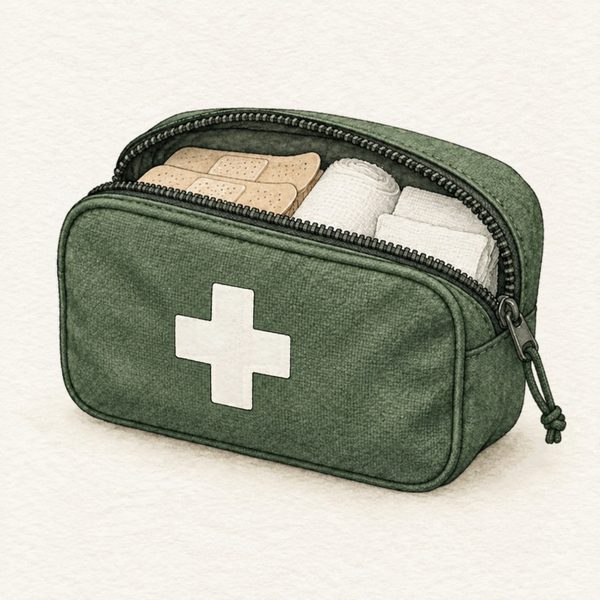
Restock the first aid kit and medicine box

The Red Cross suggests checking expiration dates and replacing anything used or out of date [5]. For expired medicine, FDA recommends a take-back site first, and lists household disposal steps for when none is nearby [6].

More: Medications guide

Update contacts and documents

Ready.gov advises re-thinking your needs every year as your household changes [4]. Check the emergency contact list, the out-of-area contact, and the copies of key documents. A new baby, a move, or a new medicine all belong in the plan.

More: Documents and Records

For the full list of seasonal home tasks, see our home maintenance calendar.

Twelve months

One small step for each month

Each step takes an afternoon or less and links to a guide that walks you through it. Skip ahead or swap months to fit your seasons.

January

The yearly reset

The hour-long check above. Do it the first weekend and the rest of the year gets easier.

Jump to the reset

February

Water

Work out how much your household needs and where it will live. Start with the few days Ready.gov suggests, then build toward a goal that fits your home.

How much water to store

March

Documents

Gather birth certificates, insurance policies, and account numbers into one binder, with copies kept somewhere else.

Documents and Records

April

The garden

Spring planting is a skill that pays back all year, whether it is one tomato on a balcony or a full plot.

Seasonal garden prep

May

Your local risks

Every area has two or three hazards that matter most. Learn yours before the season for them arrives.

Local risks by state

June

The power outage plan

Decide now what you will do for light, food, phones, and medical devices when the power is out for a day or a week.

Power outage action plan

July

First aid, and the water swap

Midyear is the second six-month swap for water you filled yourself [3]. It is also a good month to take a first aid or bleeding control class.

First Aid Kits handbook

August

The car

A small kit in the trunk covers the common problems: a dead battery, a flat tire, a long wait on a closed road.

Vehicle emergency kit

September

The family plan

September is National Preparedness Month [7]. Agree on where to meet, who to call, and how to reach each other if phones are down.

Family communication plan

October

Heat and fire safety

Fire Prevention Week falls in October [8]. Check the furnace, the space heaters, and the plan for staying warm if the heat goes out.

Heating during outages

November

The pantry

Before the holidays, fill the gaps in what your family actually eats, not a bucket of food nobody likes.

Pantry rotation

December

Gifts that build readiness

A headlamp or a weather radio is a gift that gets used. Our gift guide has 25 ideas.

Christmas gift guide

Start-of-year shopping list

Nine tools worth owning

You do not need all of these, and none of them replaces the January reset. Each one matches a month in the plan. Each Amazon link opens a search rather than one product, so you can compare what is in stock that day, and each handbook link explains what to look for.

For anything with a lithium battery, search the brand on the CPSC recall list before you buy.

Small steps, mostly under $50

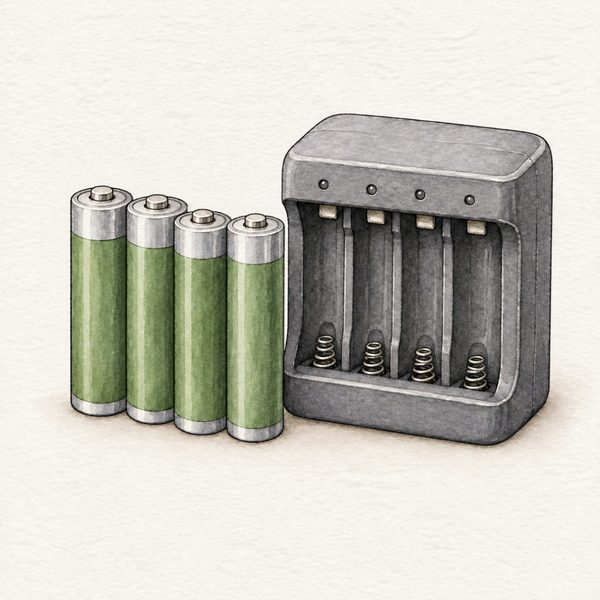
Four NiMH rechargeable AA batteries on a light background

01 · For every household

Rechargeable AA batteries

Flashlights, radios, and remotes all eat AA cells. A set of rechargeables plus a charger means you start every outage with full batteries instead of hunting for a fresh pack.

About $8 to $16 for four NiMH cells, plus $20 to $40 for a charger.
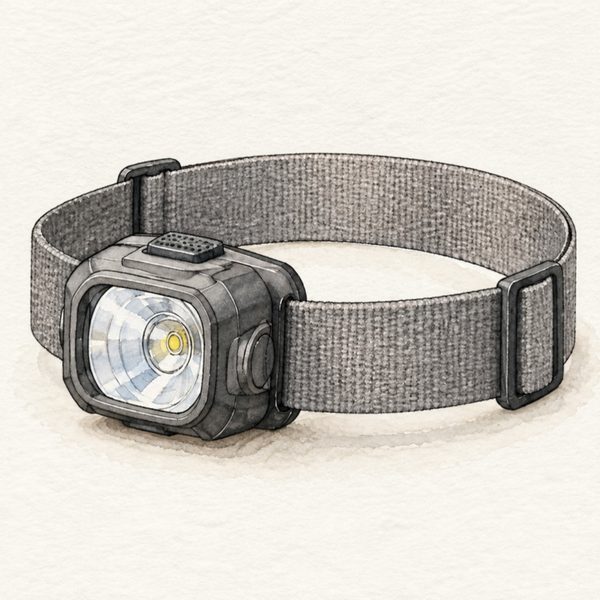
A headlamp with a plain grey strap

02 · For every adult

A good headlamp

A flashlight ties up one hand. A headlamp leaves both free for a breaker box, a stove, or a child who needs help in the dark. Look for a red-light mode and an honest brightness rating.

About $35 to $50 for a name-brand model such as the Black Diamond Spot 400 [9].

A closed first aid kit case

03 · For the January restock

A family first aid kit

If last year's kit has been raided for bandages, this is the month to replace it or fill it back in. A family kit is a better start than a car-sized pouch.

About $20 for a basic box, and about $43 for a family kit [10] [11].

Stackable rectangular water containers

05 · For the February water step

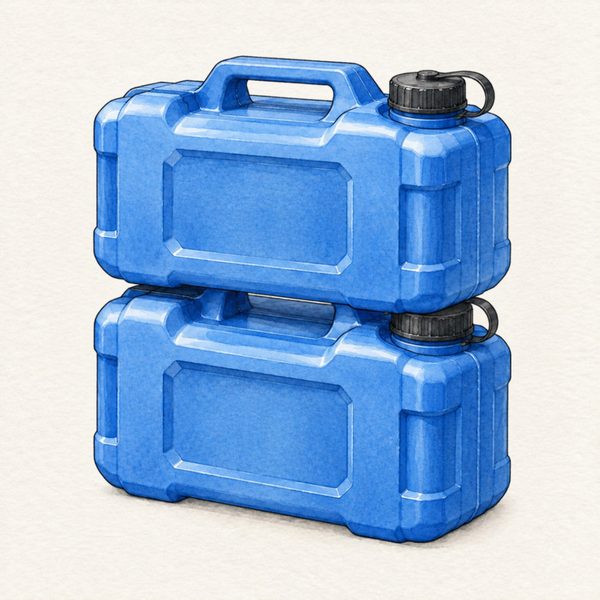
Stackable water containers

Hard, stackable containers make it easy to keep a two-week supply in a closet or under a bed, and easy to empty and refill on your six-month swap.

About $15 to $35 each. A six-pack of 3.5-gallon WaterBricks listed for about $124 at Walmart [12].

Mid-size, about $30 to $200

A tabletop weather alert radio

06 · For the bedroom nightstand

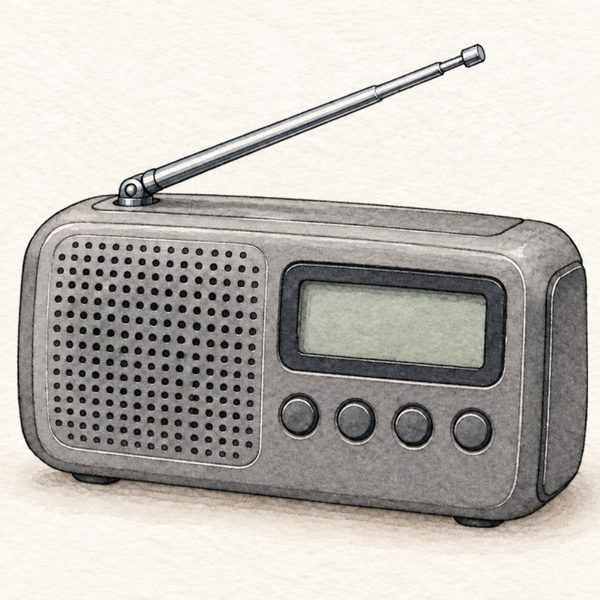
A weather alert radio

An alert radio wakes you for a warning in the middle of the night, when the phone is on silent. Look for SAME coding, which lets you set it to alert for your county.

About $30 to $80.

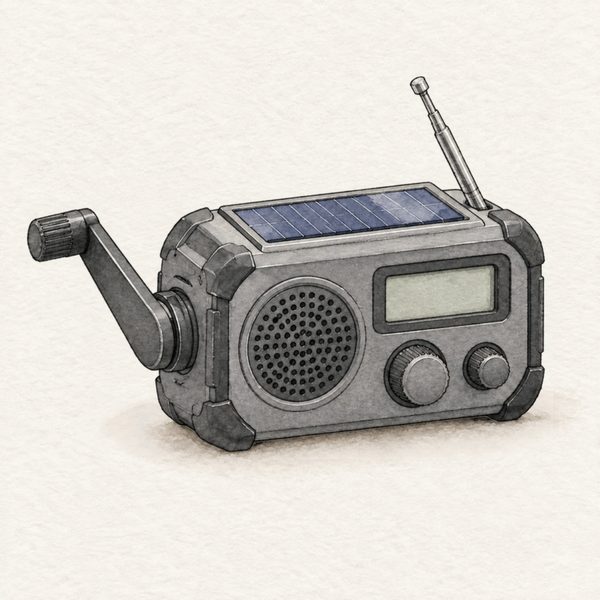
A hand-crank radio with a plain grey body

07 · For long outages

A hand-crank weather radio

A crank or solar radio keeps the news coming after the batteries run out, and most can charge a phone a little in a pinch.

About $23 for a basic model, and about $70 to $80 for a well-known one such as the Midland ER310 [13] [14].

Worth saving for

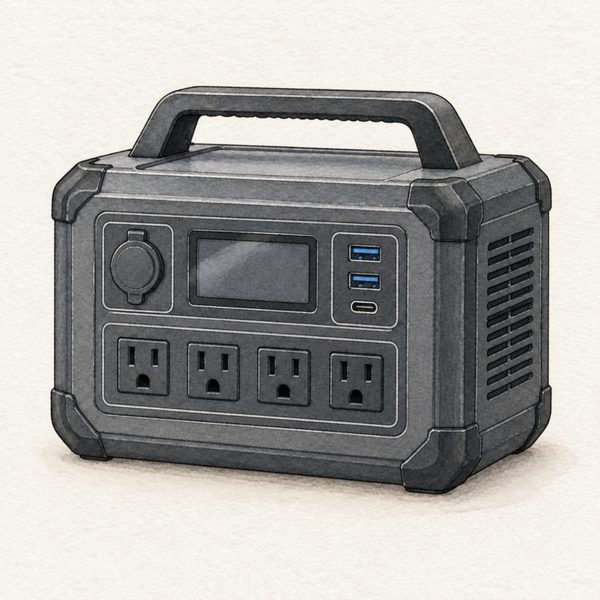
A portable power station with a handle

09 · For the June outage step

A portable power station

A power station is a large rechargeable battery with ordinary outlets. It runs lights, phones, or a small fridge for a while during an outage. Size it to what you actually need to keep running.

About $150 to $400 for a small unit, $400 to $900 for a mid-size one, and more for large ones.

Affiliate disclosure: New World Survival earns a small commission on qualifying Amazon purchases at no cost to you. This helps us cover operating costs and keep building new content. We only recommend gear we would put in our own kit. Commission never decides a recommendation.

Keep it going

Put the plan on your calendar

A plan that lives only on this page gets forgotten by March. Our free monthly reminder emails you when dated supplies come due and when the regular household checks are next, or gives you a calendar file if you prefer.

If you keep your household on New World Survival, the household calendar shows those checks beside your chores and local events, all on one page. The family meetings and calendars guide covers how to share the plan with everyone at home.

Questions

Questions about a new year plan

What should I check every January?

Test the smoke and carbon monoxide alarms, swap any water you stored yourself, rotate the pantry, restock the first aid kit and set aside expired medicine, and update your emergency contacts and document copies. It takes an hour or two.

How often should I replace stored water?

Ready.gov says water that has not been commercially bottled should be replaced every six months. Store-bought bottled water should stay sealed in its original container in a cool, dark place. A January and July swap is an easy rhythm.

How often should I test smoke and carbon monoxide alarms?

Monthly. The U.S. Fire Administration and CPSC both advise testing alarms every month and replacing standard batteries at least once a year. Smoke alarms should be replaced 10 years from their manufacture date.

Do I need to buy a lot of gear to get prepared this year?

No. Most of the plan is checking and organizing what you already have. If you buy one thing, a headlamp or a set of rechargeable batteries covers a problem nearly every household meets sooner or later: a dark house during a power outage.

Is a New Year preparedness plan different from a resolution?

A resolution asks for a big change all at once. This plan asks for one small task each month, so by December the household is ready without a weekend of shopping or a large bill.

Where this comes from

Sources

Price ranges without a numbered source come from our own buyer's handbooks for each category, linked on each item, where the research behind them is cited.

  1. U.S. Fire Administration (FEMA). "Smoke alarms." Test monthly, replace batteries at least once a year, replace alarms 10 years from the manufacture date. Accessed November 27, 2026. usfa.fema.gov
  2. U.S. Consumer Product Safety Commission. "CO Alarms." Recommends testing smoke and CO alarms monthly and replacing their batteries annually. Accessed November 27, 2026. cpsc.gov
  3. Ready.gov. "Water." At least one gallon per person per day for several days; water not commercially bottled replaced every six months. Accessed November 27, 2026. ready.gov
  4. Ready.gov. "Build a Kit." Kit maintenance: replace expired items, keep canned food cool and dry, re-think your needs every year. Accessed November 27, 2026. ready.gov
  5. American Red Cross. "Anatomy of a First Aid Kit." Check the kit regularly, check expiration dates, replace used or out-of-date contents. Accessed November 27, 2026. redcross.org
  6. U.S. Food and Drug Administration. "Disposal of Unused Medicines: What You Should Know." Take-back first; flush list; household trash steps. Accessed November 27, 2026. fda.gov
  7. Ready.gov. "National Preparedness Month." An observance each September. Accessed November 27, 2026. ready.gov
  8. National Fire Protection Association. "Fire Prevention Week." Held each October. Accessed November 27, 2026. nfpa.org
  9. REI. "Black Diamond Spot 400 Headlamp." Product page, listed at $49.95. Accessed November 27, 2026. rei.com
  10. Tractor Supply Co. "Adventure Medical Kits Adventure Family First Aid Kit." Product page, listed at $42.99. Accessed November 27, 2026. tractorsupply.com
  11. Walmart. First aid kit listings, including the First Aid Only 260-piece kit at $19.98. Accessed November 27, 2026. walmart.com
  12. Walmart. Water storage listings, including the WaterBrick 3.5-gallon six-pack at $124.49. Accessed November 27, 2026. walmart.com
  13. Target. "Midland ER310 Portable Emergency Crank Weather Radio." Product page, listed at $69.99. Accessed November 27, 2026. target.com
  14. Walmart. Emergency crank radio listings, including the Kaito KA336 at $22.99. Accessed November 27, 2026. walmart.com
  15. U.S. Consumer Product Safety Commission. "Recalls." Searchable list of product recalls. Accessed November 27, 2026. cpsc.gov

Stay current

Every item on the shopping list has a full guide in our Buyer's Guides. The Weekly Readiness Brief is a quiet way to keep the year on track.

About the author

Dan Whelan is the founder of New World Survival. He and his wife Vicki rode out Hurricane Andrew in 1992 and spent the week after sorting donations at a relief center in Homestead. More than thirty years of household preparedness later, he built this site to pass on what works. Read their story